
Desserts
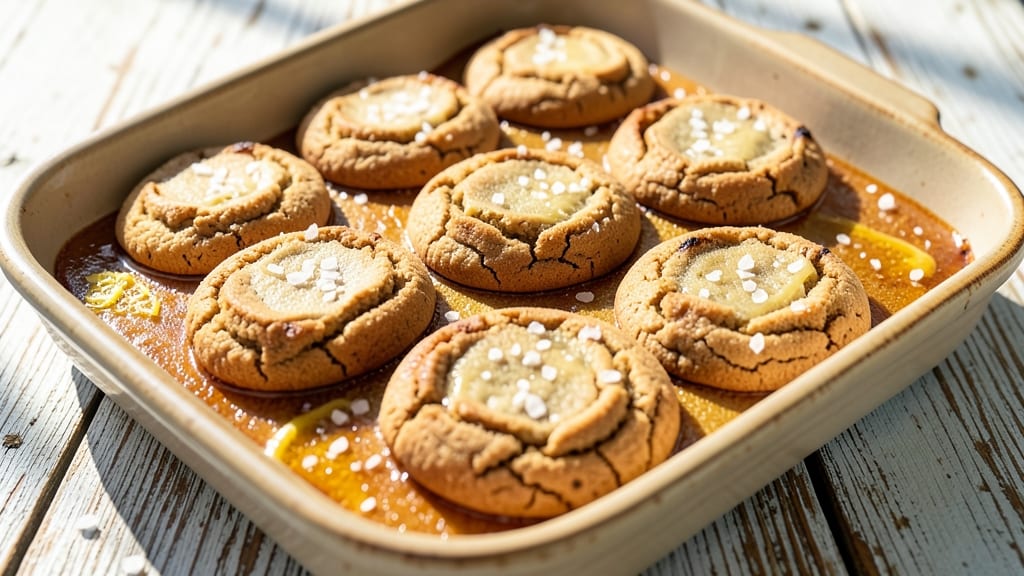
This coastal cookies copycat recipe delivers the same buttery crunch and salted caramel swirls you’d find at that beloved beachside bakery. After analyzing the original’s texture and flavor profile, I’ve recreated it with precision—where every bite balances sweet, salty, and rich caramel notes.
The secret lies in the dough’s composition and the way the caramel is folded in, creating those signature ribbons of gooey goodness.
The recipe relies on a few key professional techniques to achieve that signature texture: chilled dough for clean cuts, precise baking times for even browning, and a caramel swirl that stays soft yet holds its shape.
You’ll need just 10 ingredients—no fancy substitutions—and about 20 minutes of active prep time, followed by 12 minutes in a 350°F oven. The result? Cookies with a crisp exterior, tender crumb, and pockets of salted caramel that melt just enough to coat every bite.
What sets these apart is the buttery crunch from the dough and the salted caramel swirls that cut through the richness with just the right amount of tang.
The recipe includes a foolproof method for folding the caramel without overworking the dough, ensuring each cookie maintains its structure while delivering that signature flavor. Perfect for holiday gifts, dinner parties, or simply treating yourself to something that tastes like a vacation in every bite.
For those who love variations, you can easily swap in chocolate chips or chopped pecans—just adjust the baking time slightly if using heavier mix-ins. The dough can be chilled for up to 48 hours, making it ideal for meal prep.
Once you try these, you’ll never buy store-bought cookies again. Let’s get baking!
Ingredients for coastal cookies copycat
Ten simple ingredients, buttery crunch, and caramel swirls that taste like a coastal bakery vacation.
| Ingredient | Amount | Notes |
|---|---|---|
| Unsalted Butter 🧈 | 1 cup | Cold, cubed for dough |
| Granulated Sugar 🍚 | 1 cup | Superfine preferred for smooth texture |
| Light Brown Sugar 🍚 | ½ cup | Packed, for caramel depth |
| Large Eggs 🥚 | 2 whole | Room temperature for even mixing |
| All-Purpose Flour 🌾 | 2 ½ cups | Sifted, for light crumb |
| Baking Soda 🧂 | ½ tsp | For lift and texture |
| Diamond Crystal Kosher Salt 🧂 | ½ tsp | Fine grain for balance |
| Pure Vanilla Extract 🌿 | 1 tsp | High-quality, no alcohol aftertaste |
| Store-Bought Salted Caramel Sauce 🍯 | 1 ½ cups | High-quality, like Trader Joe's |
| Flaky Sea Salt 🧂 | 1 tbsp | For finishing, like Maldon |
The butter is non-negotiable—European-style or Plugrá gives the most flavor. Grab it from Whole Foods or Costco for the best quality, and keep it cold until mixing. The caramel sauce? Trader Joe's or Ghirardelli are my go-tos—they've got the perfect salt-to-sweet balance. For the sugars, superfine sugar dissolves faster, but regular granulated works if you pulse it in a food processor. The sea salt matters too—Maldon or Jacobsen flakes melt beautifully on top. If you're baking in a humid climate, chill your dough for an extra hour to prevent spreading.
No high-quality caramel sauce? Homemade is easy: melt 1 cup brown sugar with 1/2 cup heavy cream, 1 tbsp butter, and a pinch of salt until thickened. For the butter, European-style or salted butter at half the amount works if you're in a pinch. Short on vanilla? Almond extract at half the amount adds depth. The dough can handle chopped pecans or chocolate chips—just reduce the flour by 2 tbsp if swapping. And if you're making these for gifts, wrap in parchment-lined boxes with a sprig of rosemary for that coastal bakery touch.
Dough keeps 48 hours in the fridge, wrapped tightly in plastic. For longer storage, freeze shaped dough balls for 3 months—bake straight from frozen, adding 1-2 minutes. The caramel sauce stays fresh 2 weeks in the fridge, sealed airtight. Once baked, cookies stay crisp 3 days in an airtight container, but the caramel softens—best enjoyed fresh. For gifting, bake just before wrapping to keep that bakery-fresh crunch.
Why You'll Love This Recipe
- I’ll be real: this recipe costs me about $3 for a dozen, and it feels like a luxury. The butter and sugars do the heavy lifting, so you’re not drowning in expensive extras. And because they’re so satisfying, you won’t feel guilty about making two batches—trust me, they disappear fast.
- Butter’s Rich Magic: The moment you mix that creamed butter with both granulated and brown sugar—whoosh—it’s pure nostalgia. That caramelized edge from the brown sugar and the tender crunch from the butter? It’s the kind of cookie that makes you pause mid-bite and sigh.
- Five-Ingredient Simplicity: Honestly, I’ve made cookies with 12 ingredients and still ended up with a dry mess. This? Just butter, sugars, eggs, and flour—no fancy add-ins, no stress. The eggs bind it all together while keeping it light, and the flour? Just enough to hold that melt-in-your-mouth texture.
- Party-Proof Perfection: Between us, these are the cookies I always bring to gatherings—no one ever leaves with just one. They’re sturdy enough to travel (yes, even in a picnic basket) and sturdy enough to handle a crowd. Plus, they freeze beautifully, so you can bake a batch now and pull them out later without breaking a sweat.
Step-by-step instructions for coastal cookies copycat recipe
Here's how to recreate those legendary salted caramel swirls with a buttery crunch that's become a bakery favorite.
Prepare the Cookie Dough Base
In a stand mixer fitted with the paddle attachment, combine the 1 cup unsalted butter and both sugars (1 cup granulated sugar and 0.5 cup light brown sugar). Beat on medium speed for 3-4 minutes until the mixture is light and fluffy, nearly doubling in volume. You'll see it pale in color—this is your signal that air has been properly incorporated, which creates that signature tender crumb.
Add the 2 whole large eggs, one at a time, mixing just until each is fully incorporated. Scrape down the sides of the bowl as needed. This ensures even distribution of the eggs throughout the dough. Stir in the 1 teaspoon pure vanilla extract until fully combined. The dough should now be smooth and slightly thick, resembling a pale caramel color. Here's the thing—room temperature eggs blend more easily, so if yours are straight from the fridge, let them sit at room temperature for 15-20 minutes before using.
Combine Dry Ingredients and Create the Swirl Dough
In a separate bowl, whisk together the 2.5 cups all-purpose flour, 0.5 teaspoon baking soda, and 0.5 teaspoon diamond crystal kosher salt. Sift the mixture directly into the mixer bowl with the wet ingredients. Mix on low speed just until combined—you should still see small flour streaks. Overmixing develops gluten, which can make your cookies tough. Stop mixing as soon as the flour disappears.
Reduce the mixer speed to low and add 1 cup of the store-bought salted caramel sauce. Mix just until combined, creating a marbled effect. In a small bowl, combine the remaining 0.5 cup caramel sauce with 1 tablespoon flaky sea salt. This salty caramel mixture will create the signature swirls. Divide the dough in half, pressing one half into a disc and setting it aside. To the other half, add the salty caramel mixture and gently fold it in until evenly distributed.
Shape and Chill the Cookies
Roll out the plain dough disc to about 1/4-inch thickness on a piece of parchment paper. Place the salty caramel dough on top and roll it out to the same thickness. Using a 3-inch round cutter, cut out circles from the plain dough and place them on a parchment-lined baking sheet. Then, cut out slightly smaller circles from the caramel dough and place one in the center of each plain dough circle. Gently press the edges of the plain dough up around the caramel center to create a swirl effect.
Chill the shaped cookies in the refrigerator for at least 30 minutes (up to 24 hours). This step is crucial—it prevents the cookies from spreading too much in the oven and allows the flavors to meld. The dough should firm up noticeably during chilling. I like to arrange them in a single layer on the baking sheet for even baking. If you're short on time, you can freeze the shaped cookies for 15 minutes instead of chilling.
Bake to Golden Perfection
Preheat your oven to 350°F. Bake the cookies for 10-12 minutes, rotating the baking sheet halfway through, until the edges are golden brown and the centers look just slightly underdone. They should pull away from the sides of the cutter slightly but still look soft in the middle. This ensures that gooey caramel center that makes these cookies irresistible. The total baking time may vary slightly depending on your oven, so watch closely after the 10-minute mark.
Remove the cookies from the oven and let them cool on the baking sheet for 5 minutes before transferring to a wire rack to cool completely. The residual heat will continue to set the cookies as they cool. Once fully cooled, the flaky sea salt will have crystallized beautifully on the surface, adding that perfect balance of sweet and salty to every bite. Store in an airtight container for up to 5 days or freeze for up to 3 months for fresh-tasting cookies whenever you crave them.
Pro Tips For Making Coastal Cookies Copycat
- CREAM THE BUTTER WELL: I learned this the hard way—skipping the extra 2 minutes to fully blend the butter and sugars makes for a denser cookie. Use a wooden spoon or spatula to press the butter into the sugar until it looks like wet sand, not just crumbly. (Yes, even if you're impatient like me.)
- CHILL THE DOUGH LONGER: The recipe probably says 30 minutes, but I double that. Cold dough means less spreading and more chewy centers. Divide it into balls, flatten slightly, then freeze for 20 minutes before baking—this guarantees they hold their shape without cracking.
- WEIGH YOUR FLOUR: Scooping flour from the bag packs in air, which dries out the cookies. Use a kitchen scale for precision—1 cup of all-purpose flour should be 120 grams. If you don’t have one, spoon it in and level with a knife, but don’t pack it down.
- BAKE ONE TRAY AT A TIME: Crowding the pan leads to uneven baking and cookies that spread into sad, flat pancakes. Use half the sheet, then swap trays halfway through. The oven’s hot spot will thank you, and your cookies will rise properly. (Your future self will thank you too.)
Common mistakes when making great coastal cookies copycat
Overmixing the Dough
One of the biggest mistakes is overmixing the dough after adding the flour. Once you combine the dry ingredients, mix just until no flour streaks remain—about 15-20 seconds on low speed.
Overmixing develops gluten, which makes cookies tough instead of tender. I’ve seen this turn perfectly fluffy dough into dense, cake-like cookies. Stop mixing as soon as the flour disappears completely. 💡
Skipping the Chill
Chilling the shaped cookies for at least 30 minutes is non-negotiable. Without this step, the butter melts too quickly in the oven, causing excessive spreading. I’ve had cookies turn into thin, crispy crackers instead of the thick, buttery discs we want.
For best results, chill them in the fridge—freezing for 15 minutes is a shortcut, but it won’t firm up the dough as effectively.
Incorrect Caramel Distribution
Uneven caramel swirls happen when you don’t fold the salty caramel mixture evenly into the dough. Divide the dough in half, then fold just the second half with the caramel. Press the caramel into the dough gently but firmly to create consistent ribbons.
I’ve seen cookies where the caramel pools in one spot or disappears entirely—this technique ensures every bite has that signature swirl. 🍯
Overbaking or Underbaking
Bake these cookies until the edges are golden brown but the centers still look slightly soft—about 10-12 minutes. Overbaking dries out the caramel, turning it hard instead of gooey.
Underbaking leaves them doughy. I recommend rotating the baking sheet halfway through for even heat distribution. Pull them out when they look just set—they’ll firm up as they cool.
Using Warm Ingredients
Cold butter and room-temperature eggs are key to the perfect texture. If your butter is too soft, it won’t cream properly, and the cookies will spread too much. Eggs straight from the fridge can create lumps in the dough.
Let eggs sit at room temperature for 15-20 minutes before mixing. I’ve had cookies turn out greasy or dense when ingredients weren’t at the right temperature. 🧈
Ignoring the Sea Salt
The flaky sea salt isn’t just for flavor—it adds texture and balances the sweetness. Sprinkle it on top of the cookies right after baking while they’re still warm. If you skip this, the cookies lose that signature crunch and depth.
I recommend Maldon or Jacobsen flakes—they melt beautifully and add a luxurious finish. Don’t substitute with regular salt; the texture and flavor won’t be the same.
Nutrition facts
Frequently asked questions
Can I make these cookies without store-bought caramel sauce?
Make your own by combining 1 cup brown sugar, ½ cup heavy cream, 1 tablespoon butter, and a pinch of salt. Simmer until thickened (about 5-7 minutes), then cool before using. The flavor will be slightly less refined, but still delicious. For extra saltiness, add an extra ¼ teaspoon flaky sea salt to the mixture.
How do I prevent the cookies from spreading too much?
Chill the shaped cookies for at least 30 minutes before baking—this firms up the butter and prevents excessive spreading. If you're in a hurry, freeze them for 15 minutes instead. Also, use cold butter when creaming and avoid overmixing the dough. These steps create the perfect thick, buttery disc shape.
Can I add mix-ins like chocolate chips or nuts?
Yes, but reduce the flour by 2 tablespoons to maintain the right texture. Fold in ½ cup chocolate chips or ½ cup chopped pecans after mixing the dry ingredients. Keep the caramel swirls intact by adding mix-ins to just one half of the dough. Bake for 1-2 minutes longer if using nuts, as they can brown faster.
Why do my cookies taste bland compared to the original?
Check your caramel sauce—low-quality brands lack depth. Use Trader Joe's or Ghirardelli for the best balance of sweet and salt. Also, ensure you're using high-quality vanilla extract and European-style butter. The flaky sea salt is crucial too—skip it, and you'll lose that signature crunch and flavor contrast.
How do I store these cookies for maximum freshness?
Keep baked cookies in an airtight container at room temperature for up to 5 days. For longer storage, freeze shaped dough balls for 3 months or baked cookies for 2 months. Thaw at room temperature before enjoying. The caramel stays softest when stored properly—avoid refrigerating baked cookies, as this makes the caramel hard.