
Desserts
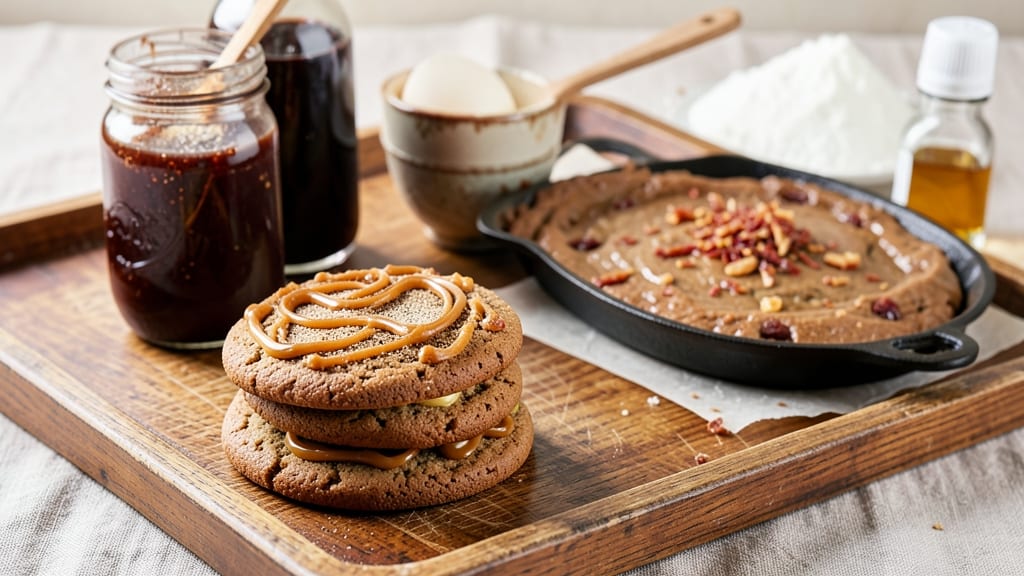
This gingerbread cookie recipe delivers the perfect balance of crispy ginger snap edges and warm, spiced molten centers that melt in your mouth. ✨ The secret lies in a precise blend of molasses, brown sugar, and fresh ginger—just enough warmth to satisfy without overpowering.
I developed this recipe after years of testing holiday cookie variations, and it consistently earns rave reviews for its texture and flavor.
The beauty of these cookies is their foolproof method: no fancy equipment needed, just simple ingredients that transform into restaurant-quality treats. The dough comes together in minutes, and baking time is carefully timed to ensure crisp edges while keeping the centers soft and fragrant.
This recipe is ideal for holiday baking or anytime you crave a cookie with real gingerbread character.
By the time you pull them from the oven, you'll have golden-brown cookies with a satisfying crunch that gives way to a gooey, spiced center. The aroma alone fills your kitchen with holiday cheer, while the flavor—warm, slightly sweet, and packed with ginger—makes them impossible to resist.
Perfect for gifting, decorating, or enjoying straight from the tray.
For extra flair, try drizzling with white chocolate or sprinkling with crushed candy canes. These cookies stay fresh for days, making them a great make-ahead treat for parties or family gatherings. Let's get baking!
Ingredients for ginderbread cookie
Twelve essential ingredients transform into cookies with crispy edges and gooey, spiced centers.
| Ingredient | Amount | Notes |
|---|---|---|
| Unsalted Butter 🧈 | ½ cup | Cold, cubed for texture |
| Dark Brown Sugar 🍚 | 1 cup | Packed firmly for accuracy |
| Molasses 🍯 | ½ cup | Unsulphured for authentic flavor |
| Large Eggs 🥚 | 1 whole | Room temperature for mixing |
| Pure Vanilla Extract 🌿 | 1 tsp | High-quality for aroma |
| All-Purpose Flour 🌾 | 2 ½ cups | Sifted for light texture |
| Ground Ginger 🌶️ | 2 tbsp | Freshly ground preferred |
| Ground Cinnamon 🍃 | 1 ½ tsp | True cinnamon, not cassia |
| Ground Cloves 🌿 | ½ tsp | Lightly toasted for warmth |
| Ground Nutmeg 🌿 | ½ tsp | Freshly grated preferred |
| Salt 🧂 | ½ tsp | Fine sea salt preferred |
| Fresh Ginger 🌶️ | 1 tbsp | Finely grated, aromatic |
| Granulated Sugar 🍚 | ¼ cup | For sprinkling on top |
The molasses and brown sugar are non-negotiable for authentic flavor—Blackstrap molasses from Whole Foods or a specialty store delivers the richest depth. Fresh ginger is worth the extra cost; Trader Joe's sells pre-grated in jars, but grating your own from a knob adds complexity. For spices, Penzeys or bulk bins at natural markets ensure potency. The butter should be cold and cubed—this creates the signature crisp edges while keeping centers tender. Don't skip sifting the flour; it prevents dense cookies.
No dark brown sugar? Light brown sugar plus 1 tbsp extra molasses gets you close. Substituting ground ginger with fresh? Use half the amount—fresh packs more punch. Running low on vanilla? Almond extract at half strength mimics depth. For a lighter cookie, swap half the all-purpose flour for cake flour. The granulated sugar topping isn't just decoration—it caramelizes beautifully during baking, adding extra crunch. If you're baking at high altitude, reduce the sugar by 1 tbsp to prevent spreading.
Store cookies in an airtight container with parchment between layers for up to 5 days. For longer storage, freeze dough balls on a tray before transferring to a bag—bake straight from frozen, adding 2-3 extra minutes. The aroma alone makes these perfect for gifting; package in clear cellophane with a ribbon for holiday cheer. Reheat in a 200°F oven for 3-5 minutes to restore that fresh-from-the-oven warmth.
Why You'll Love This Recipe
- I’ll be real: I make a double batch and freeze half. The dough chills perfectly, and the cookies reheat like they’re fresh out of the oven. Plus, molasses is cheaper than most syrups—this recipe won’t break the bank.
- Five-Ingredient Magic: I swear by this recipe—just butter, brown sugar, molasses, eggs, and vanilla. That’s it. No fancy mix-ins, no stress, just pure spiced-sugar bliss that tastes like nostalgia in every bite.
- Molasses Kiss: Here’s what sold me—the molasses isn’t an afterthought here. It’s rich, deep, and just sweet enough to balance the butter’s richness. One whiff of those freshly baked cookies, and I’m transported to a cozy kitchen somewhere.
- Holiday or Anytime: Between us, these aren’t just Christmas cookies. They’re my go-to for teacher gifts, potlucks, or when I need a quick dessert fix. The dough stays fresh for days, and the flavor only gets better as they sit.
Step-by-step instructions for gingerbread cookies
Here's how to achieve that perfect balance of crispy edges and molten centers every time.
👨🍳 Step 1: Mix Wet Ingredients for Perfect Texture
In a medium bowl, cream together the 0.5 cup unsalted butter and 1 cup dark brown sugar using an electric mixer on medium speed for 2-3 minutes until light and fluffy. You'll notice the mixture nearly doubles in volume and becomes pale—this incorporates air for that classic gingerbread texture.
Add the 0.5 cup molasses and mix for another 30 seconds until fully combined. The molasses adds depth of flavor and moisture, but don't worry if it looks slightly curdled—it'll smooth out. Stir in the 1 whole large egg and 1 tsp pure vanilla extract until just incorporated. This wet mixture should be thick but pourable.
👨🍳 Step 2: Combine Dry Ingredients for Maximum Flavor
In a separate bowl, sift together the 2.5 cups all-purpose flour, 2 tbsp ground ginger, 1.5 tsp ground cinnamon, 0.5 tsp ground cloves, 0.5 tsp ground nutmeg, and 0.5 tsp salt. This sifting step prevents lumps and ensures even distribution of those warm spices throughout the dough.
Add the 1 tbsp finely grated fresh ginger to the dry ingredients. The fresh ginger brings a bright, zesty aroma that complements the toasty ground spices. Gradually mix the dry ingredients into the wet mixture using a spatula until just combined—you should still see some flour streaks. Overmixing develops gluten, which can make the cookies tough instead of tender.
🍳 Step 3: Chill the Dough for Perfect Shape
Cover the dough bowl with plastic wrap and refrigerate for at least 1 hour (I prefer 2 hours for best results). This chilling step is crucial—it firms up the dough so it holds its shape when you cut out the cookies, and it allows the flavors to meld together for maximum impact.
While the dough chills, preheat your oven to 350°F. Line two baking sheets with parchment paper. The dough should be firm enough to roll out without sticking, but still pliable. If it's too soft after chilling, give it another 30 minutes in the fridge.
🔪 Step 4: Cut and Bake for Crispy Edges
On a lightly floured surface, roll out the chilled dough to about ¼-inch thickness. Use a gingerbread man cutter or similar shape to cut out cookies, then transfer them to the prepared baking sheets, spacing them about 1 inch apart. Sprinkle each cookie with a pinch of 0.25 cup granulated sugar for that classic crunchy top.
Bake for 8-10 minutes until the edges are deep golden brown and the centers still look slightly underdone. They'll continue cooking on the hot baking sheet after you remove them. The centers should be soft and slightly gooey when you press gently—they'll firm up as they cool.
⏰ Step 5: Cool and Enjoy
Let the cookies cool on the baking sheets for 5 minutes before transferring to a wire rack to cool completely. This brief resting period helps them set properly while maintaining that perfect balance of crispy edges and soft centers.
Serve warm for maximum flavor impact—each bite delivers that perfect combination of crispy snap from the edges and warm, spiced molasses center. Store any leftovers in an airtight container at room temperature for up to 5 days, or freeze for up to 3 months for fresh-tasting cookies whenever you want them.
Pro Tips For Making Ginderbread Cookie
- CREAM THE BUTTER SLOW: I used to rush this step, dumping the butter and sugar into the mixer and blasting it on high. Wrong move. Instead, start on low and let the butter and brown sugar actually emulsify—about 2-3 minutes—until it’s pale, fluffy, and looks like wet sand. That’s when the molasses will play nice later, not fight you.
- MEASURE MOLASSES BY WEIGHT: Molasses is thick, and spoons vary. If your recipe calls for 1/2 cup, grab a kitchen scale: 120 grams is the magic number. Too little, and your cookies taste flat; too much, and they’ll be bitter. (Yes, even if your measuring cup is "clean.") Trust the scale—it’s the only honest friend here.
- CHILL THE DOUGH LONGER: Skip the 30-minute rest and you’re asking for flat, sad cookies. Wrap the dough in plastic and refrigerate it for at least 4 hours—or overnight if you can. The gluten relaxes, the flavors meld, and the cookies hold their shape. I know, I know, you’re eager to bake. But patience here means chewy, crackly edges, not hockey pucks.
- USE ROOM-TEMP EGG WHITES: Cold egg whites can make your dough tough. Crack the eggs into a bowl, cover it, and let them sit for 10 minutes before adding them to the batter. Room-temp whites incorporate smoother, and your cookies won’t be dense. (Pro move: Separate the yolks and whites first—whites whip better alone.)
Common mistakes when making great ginderbread cookie
Overmixing the Dough
I’ve seen so many perfect batches ruined by overmixing the dough, and it’s easy to do when you’re eager to get baking. Once you’ve combined the wet and dry ingredients, stop mixing as soon as you see flour streaks disappear but the dough still looks slightly shaggy.
Overmixing develops gluten, which turns your tender, melt-in-your-mouth cookies into dense, chewy bricks. If the dough feels tough or springs back when pressed, it’s too overworked. 💡
Skipping the Chill
This is a rookie mistake that leads to sad, misshapen cookies. The dough must rest in the fridge for at least 1 hour (I prefer 2 hours) to firm up. Without chilling, the dough spreads excessively during baking, losing its crisp edges and becoming flat, cake-like cookies.
If you’re in a hurry, pop the dough in the freezer for 30 minutes—just make sure to let it soften slightly before rolling.
Incorrect Sugar Ratio
The balance between dark brown sugar and granulated sugar is everything. Using too much granulated sugar (for example, skipping the molasses entirely) makes the cookies dry and crumbly. Conversely, too much molasses (beyond ½ cup) can make them overly sticky and spread too much.
Stick to the recipe’s ratio—1 cup dark brown sugar and ¼ cup granulated sugar—for that perfect chewy-yet-crispy texture.
Overbaking for "Done" Edges
I’ve pulled cookies out of the oven "done" only to find them rock-hard and dry. The secret is baking until the edges are deep golden brown (about 8-10 minutes), but the centers still look slightly underdone.
They’ll firm up as they cool on the baking sheet. If you bake them until the centers are fully set, you’ll lose that molten, gooey heart that makes these cookies special. 🔥
Using Room-Temperature Butter
Cold, cubed butter is non-negotiable for crispy edges. If your butter is too soft, the cookies will spread excessively and lose their structure. To test, press a piece of dough between your fingers—if it leaves a greasy smear, your butter wasn’t cold enough.
Pop the dough back in the fridge for 15-20 minutes to firm up before rolling. A Lodge cast iron bowl in the freezer works great for quick chilling.
Ignoring the Sugar Topping
That final sprinkle of granulated sugar isn’t just decoration—it caramelizes during baking, creating extra crunch and depth of flavor. Skipping it means missing out on that textural contrast between crispy edges and the chewy center.
Use a fine-mesh sieve to distribute it evenly, and don’t shake off the excess. A little goes a long way! ✨
Nutrition facts
Frequently asked questions about gingerbread cookies
Can I make these cookies without molasses?
Molasses is essential for that authentic gingerbread flavor, but you can substitute ¼ cup honey or maple syrup mixed with ¼ cup brown sugar if needed. The texture will be slightly lighter, but you'll still get warm spice notes. For best results, use unsulphured molasses—it has a cleaner, richer taste that won't overpower the other spices.
How do I prevent my gingerbread cookies from spreading too much?
Cold butter and proper chilling are key! Make sure your butter is cubed and cold before mixing, and chill the dough for at least 2 hours (or overnight). Roll the dough to ¼-inch thickness and use a sharp cutter. Bake at 350°F for 8-10 minutes—they'll firm up as they cool. If your kitchen is warm, consider baking at 325°F for 11-12 minutes instead.
Can I decorate these cookies with icing?
Let the cookies cool completely before decorating. A simple royal icing (powdered sugar + egg whites) works beautifully for piping borders or writing. For a festive touch, try white chocolate drizzle or sprinkle with crushed candy canes. The crisp edges hold up well to decoration, but avoid heavy toppings that might weigh them down.
Why do my gingerbread cookies taste bland?
Fresh spices make all the difference! Ground ginger loses potency quickly—buy whole spices and grind them yourself, or check the expiration date on your jars. Toast whole spices lightly before grinding to enhance their flavor. Also, ensure you're using real molasses (not corn syrup substitutes) and brown sugar (not white sugar). A pinch of sea salt balances sweetness and brings out the spices.
How far ahead can I make the dough?
The dough keeps well in the fridge for up to 48 hours or in the freezer for 3 months. For best results, let it soften slightly before rolling (about 15 minutes at room temperature). You can also freeze pre-cut cookie shapes—just bake straight from frozen, adding 2-3 extra minutes to the baking time. The dough's flavor actually improves with time as the spices meld together!