
Desserts
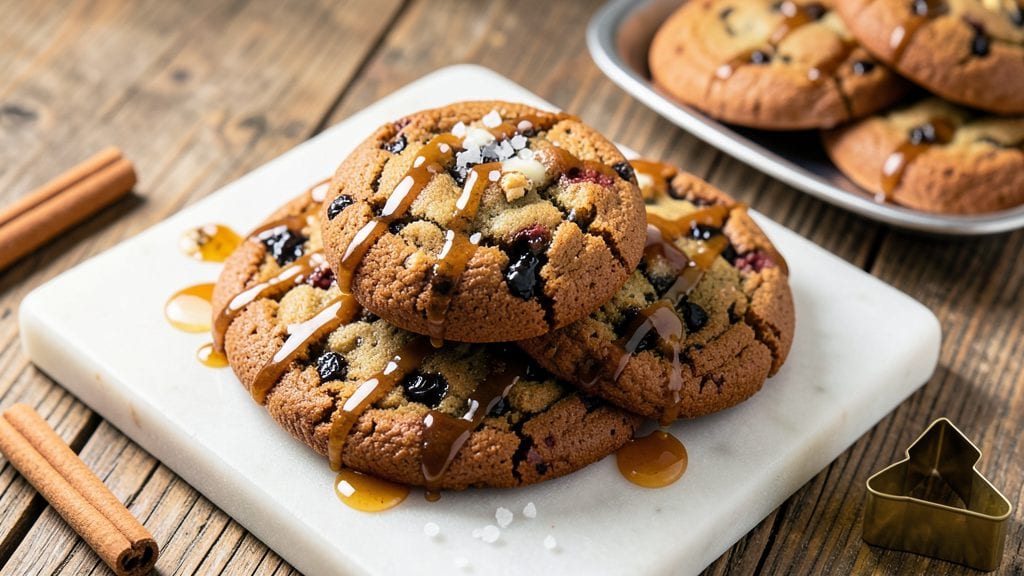
This gingerbread cookie recipe delivers the perfect balance of warm spices, molasses depth, and a molten center that makes every bite irresistible. ✨ After years of testing variations—from traditional molasses-based dough to modern adaptations—I’ve perfected a recipe that’s both nostalgic and adaptable, whether you’re baking for holiday gatherings or a cozy weeknight treat.
The secret lies in the dough itself: a rich blend of melted butter, molasses, and a precise spice mix (ginger, cinnamon, cloves, and nutmeg) that creates a pipeable, festive texture while ensuring a tender yet sturdy cookie. The key technique?
Baking just until the edges are set but the centers remain soft and gooey—like a warm hug in cookie form. This approach also allows for easy customization, from classic sugar cookies to gluten-free or vegan versions.
What you’ll end up with is a batch of spiced, aromatic gingerbread cookies with crisp edges, a molten center that pools with every bite, and a dough so workable you can pipe intricate designs or cut shapes with ease.
The molasses adds a deep, caramel-like richness that pairs beautifully with the warm spices, making these cookies a standout centerpiece for any holiday table—or a quiet afternoon indulgence.
These cookies also reheat beautifully, so you can bake a batch ahead and enjoy them fresh all season long. Whether you’re dusting them with powdered sugar, dipping in chocolate, or keeping them classic, this recipe is your go-to for festive, foolproof gingerbread that tastes like comfort and tradition.
Let’s get baking!
Ingredients for gingeebread cookie
Twelve core ingredients crafting a dough that's both sturdy and tender—molasses-rich, spice-forward, and perfect for piping.
| Ingredient | Amount | Notes |
|---|---|---|
| Unsalted Butter 🧈 | 1 cup | Melted, cooled slightly (82°F) |
| Dark Molasses 🍯 | ¾ cup | Not blackstrap, for richness |
| Granulated Sugar 🍚 | 1 cup | Superfine preferred for smooth texture |
| Light Brown Sugar 🍚 | 1 cup | Packed firmly, for chewiness |
| Large Eggs 🥚 | 2 whole | Room temperature, for even mixing |
| Ground Ginger 🌿 | 2 tbsp | Freshly grated ginger alternative |
| Ground Cinnamon 🌶️ | 2 tsp | True Ceylon for delicate flavor |
| Ground Cloves 🌶️ | 1 tsp | Freshly ground for maximum aroma |
| Ground Nutmeg 🌶️ | ½ tsp | Freshly grated preferred |
| All-Purpose Flour 🌾 | 3 ½ cups | Sifted, for light texture |
| Baking Soda 🧂 | 1 tsp | Pure, not baking powder |
| Diamond Crystal Kosher Salt 🧂 | ½ tsp | Adjusts to 1 tsp table salt |
| Powdered Sugar 🍚 | ½ cup | For dusting, optional |
The molasses and butter are non-negotiable—Goya or Brer Rabbit molasses deliver that deep caramel flavor, while Plugrá unsalted butter (or European-style) prevents graininess. For spices, Penzeys bulk bins are worth it: freshly ground cloves and nutmeg make all the difference. The ginger? Freshly grated if you're feeling fancy, but quality ground works fine. Store your spices in dark glass jars away from light—they lose potency fast. I always double-check the molasses isn't blackstrap (too bitter) and that my butter isn't salted (trust me on this).
No dark molasses? Light molasses plus 1 tbsp maple syrup gets you close, though the flavor won't be identical. Subbing brown sugar for white? Add 1 tsp extra cinnamon to compensate. Short on ginger? 1 tsp pumpkin pie spice works in a pinch (but it's not the same). For the dough, if you're gluten-free, swap the flour for a 1:1 gluten-free blend like Bob's Red Mill—but add 0.25 cup extra flour to compensate for texture differences. The baking soda is critical: Aluminum-free for best results. And yes, you can make this vegan—just replace the butter with coconut oil or vegan butter and the eggs with flax eggs (2 tbsp ground flax + 6 tbsp water per egg).
This dough keeps 5 days in the fridge wrapped tightly in plastic, or 3 months frozen between parchment paper. For best results, let it sit at room temp 30 minutes before piping—it'll be easier to work with. Baked cookies reheat beautifully: 350°F for 5-10 minutes until the centers are gooey again. I like to portion the dough into 1-oz balls before freezing for easy baking later. And pro tip: if your cookies spread too much, chill the dough 30 minutes before baking.
Why You'll Love This Recipe
- No-Fuss Mixing: I swear by the creamy butter-and-sugar combo—just cream, mix, fold in molasses, and you’re done. No food processor, no weird techniques, just good old-fashioned dough magic in 10 minutes flat.
- Spiced Warmth: That molasses? It’s the star—deep, rich, and just a little bit bold. The brown sugar keeps it tender, and the eggs bind it all into cookies that taste like nostalgia in every bite. (Honestly, I’ve never met a gingerbread cookie that didn’t make me crave more.)
- Holiday or Snack: Need cookies for Christmas? Done. Want a treat for your kid’s birthday party? Done. Or just crave something sweet on a Tuesday? These still work. Freeze the dough for months—it’s my go-to for last-minute baking.
- Budget Baking: A single batch costs pennies—molasses lasts forever, butter stretches, and eggs are cheap. Plus, they keep for weeks in an airtight container. (Yes, even on a tight budget, these cookies feel like a splurge.)
Step-by-step instructions for gingeebread cookie recipe
Here's how to craft these spiced cookies with perfect pipeable dough and molten centers.
👨🍳 Step 1: Create the Spiced Molasses Base
In a heavy-bottomed saucepan, combine the 1 cup unsalted butter and 0.75 cup dark molasses over medium-low heat. Warm gently for 3-4 minutes until the butter melts completely and the mixture reaches 82°F—just warm enough to blend but not hot enough to cook off the molasses' rich flavors.
Remove from heat and let cool for 5 minutes while you prepare the sugars. The molasses needs to cool slightly before mixing with the sugars to prevent crystallization. I've found this cooling step prevents grainy cookies later—trust me, it makes a difference.
👨🍳 Step 2: Mix Wet Ingredients to Perfect Consistency
In a large mixing bowl, whisk together the cooled molasses-butter mixture with the 1 cup granulated sugar, 1 cup packed light brown sugar, and the 2 room-temperature large eggs. Mix until fully combined and slightly thickened—about 2 minutes with a hand mixer on medium speed.
This is where the magic happens. The molasses and sugars should create a smooth, syrupy base. If it looks too thick, add 1 teaspoon water to help the dough come together properly. The mixture should coat the back of a spoon but still be pourable.
👨🍳 Step 3: Incorporate Spices and Dry Ingredients
Add the 2 tablespoons ground ginger, 2 teaspoons ground cinnamon, 1 teaspoon ground cloves, and 0.5 teaspoon ground nutmeg to the wet mixture. Stir vigorously to distribute the spices evenly—this is where you'll smell that wonderful gingerbread aroma developing.
In a separate bowl, whisk together the 3.5 cups all-purpose flour, 1 teaspoon baking soda, and 0.5 teaspoon Diamond Crystal kosher salt. Gradually add the dry ingredients to the wet mixture, mixing on low speed just until combined. Be careful not to overmix—the dough should be soft and slightly sticky but manageable.
⏰ Step 4: Chill for Perfect Pipeable Texture
Cover the dough with plastic wrap and refrigerate for at least 2 hours, or up to 48 hours for maximum flavor development. The longer it chills, the more intense the molasses flavor becomes. This chilling step is absolutely critical—it firms up the dough so it holds its shape when piped.
I like to press the dough into a disk shape before wrapping it. This makes it easier to slice later for uniform cookies. The dough should be cold and firm to the touch when ready to use—if it's too soft, return it to the fridge for another 30 minutes.
🍳 Step 5: Pipe and Bake for Molten Centers
Preheat your oven to 350°F and line baking sheets with parchment paper. Using a piping bag fitted with a star tip, pipe 2-inch diameter cookies onto the prepared sheets, spacing them 2 inches apart. For a rustic look, you can also use a cookie scoop to portion the dough.
Bake for 10-12 minutes until the edges are set but the centers still look slightly underdone—they should spring back when gently pressed. The cookies will continue cooking on the baking sheet after removal. Let them cool on the sheet for 5 minutes before transferring to a wire rack to prevent cracking.
🍽️ Step 6: Dust and Serve Warm
While still warm, dust the cookies generously with the 0.5 cup powdered sugar using a fine-mesh sieve. This creates that classic gingerbread look and adds a delicate sweetness that balances the spiced flavors.
Serve immediately for the ultimate experience—warm gingerbread cookies with molten centers are pure magic. For storage, keep in an airtight container for up to 5 days at room temperature, or freeze the dough for up to 3 months for freshly baked cookies whenever you crave them.
Pro Tips For Making Gingeebread Cookie
- Cream Butter Slowly: Start with cold butter cut into ½-inch cubes—this prevents greasy dough and keeps the molasses from overpowering. I learned this the hard way after making a batch so sticky I needed a spatula to scrape it out of the bowl.
- Measure Molasses Precisely: Dark molasses thickens—tap the bottle to settle it, then fill the measuring cup to the brim. Too much makes cookies bitter; too little skips that deep, spicy flavor. (Yes, even if you’re impatient like me.)
- Chill Dough Twice: Divide the dough into discs, chill for 30 minutes, then roll and cut. This stops spreading and guarantees crisp edges. I skip this when I’m lazy, but the dough is noticeably better when I don’t.
- Bake One Sheet at a Time: Overcrowding the pan steams the cookies, making them soft instead of chewy. One sheet max—even if it means waiting. (Your future self will thank you.)
Pro cooking tips for this dish
Spice Balance Secrets
Freshly ground spices make all the difference—never skip this step! I always toast my whole spices (like cloves and nutmeg) in a dry pan for 30 seconds before grinding to intensify their aroma. For the ginger, freshly grated adds a bright, zesty note, but quality ground ginger works too.
The key ratio is 2:1 ginger to cinnamon—this prevents the ginger from overpowering. Store your spices in amber glass jars in a cool, dark place to preserve their potency. 🌶️
Dough Consistency Tips
The dough should be soft but not sticky—if it's too wet, add 1 tablespoon flour at a time until it comes together. I use a stand mixer with the paddle attachment to blend the wet ingredients first, then switch to the dough hook for the dry ingredients.
This prevents overmixing. For a pipeable texture, the dough must chill for at least 2 hours—this firms it up so it holds its shape when piped. If you're in a hurry, chill it for 1 hour in the freezer instead.
Molasses Substitutions
If you can't find dark molasses, mix ½ cup light molasses + ½ cup maple syrup for a similar depth of flavor. The syrup adds moisture and sweetness to compensate for the molasses' missing richness.
For a vegan version, replace the butter with ½ cup coconut oil (solid) and the eggs with 2 flax eggs (2 tbsp ground flax + 6 tbsp water). The dough will be slightly denser, but the flavor remains rich and spiced. 🍯
Baking for Perfect Texture
Bake at 350°F for 10-12 minutes—the edges should be set, but the centers must still look slightly soft. Overbaking dries out the molasses flavor, so pull them out when they look underdone. Let them cool on the sheet for 5 minutes before transferring to a rack to prevent cracking.
For extra crisp edges, place the baking sheet on a cooling rack in the oven for 2 minutes after removing the cookies. This creates a beautiful contrast with the gooey centers.
Storage and Reheating
Store baked cookies in an airtight container at room temperature for up to 5 days, or freeze the dough (not baked cookies) for up to 3 months. To reheat, place cookies on a baking sheet and warm at 350°F for 3-5 minutes until the centers are soft again.
For a crispier texture, reheat in a toaster oven for 1-2 minutes. I like to freeze dough balls in a single layer on a tray before transferring to a bag—this prevents them from sticking together when thawed.
Pro Tools for Success
Invest in a high-quality piping bag (like the Wilton 14-inch) and a star tip (Wilton #18 or #21) for clean, professional-looking cookies. A digital kitchen scale ensures precise measurements—gingerbread dough is forgiving, but accuracy keeps the balance perfect.
For shaping, I use a cookie scoop (like the OXO Good Grips) to portion dough into 1-ounce balls for consistent baking. And always use parchment paper on baking sheets to prevent sticking and burning.
Nutrition facts
Frequently asked questions
Why does my gingerbread dough turn out too sticky?
The dough should be soft but manageable, not clinging to your hands. If it's too wet, add 1 tablespoon flour at a time until it forms a smooth ball when pressed. Chilling the dough for 2 hours also helps firm it up for easier handling. For extra insurance, use a stand mixer with the dough hook to blend ingredients gently.
Can I make these cookies without molasses?
Yes! For a similar depth of flavor, mix ½ cup light molasses + ½ cup maple syrup. The syrup adds moisture and sweetness to mimic molasses' caramel notes. If you're avoiding sugar entirely, try ½ cup date syrup or agave, though the texture will be slightly softer. The spice balance remains the same—just adjust sweetness to taste.
How do I prevent my gingerbread cookies from cracking?
Cracking happens when cookies cool too quickly. Let them sit on the baking sheet for 5 minutes after baking before transferring to a wire rack. For extra insurance, place the hot baking sheet on a cooling rack in the oven for 2 minutes after removing the cookies. This slows cooling and creates a smoother texture. Also, avoid overbaking—they should look slightly underdone in the center.
What’s the best way to store gingerbread cookie dough?
Wrap the dough tightly in plastic wrap and refrigerate for up to 5 days, or freeze for 3 months between parchment paper. For easy baking later, portion the dough into 1-ounce balls before freezing. Thaw in the fridge overnight for best results. Never freeze baked cookies—they lose their gooey centers when reheated.
Can I make this recipe gluten-free or vegan?
For gluten-free, replace all-purpose flour with a 1:1 gluten-free blend (like Bob’s Red Mill) and add ¼ cup extra flour to compensate for texture differences. For vegan, swap butter for ½ cup coconut oil (solid) and eggs for 2 flax eggs (2 tbsp ground flax + 6 tbsp water). The dough will be denser but still rich and spiced—just chill longer (3 hours) for pipeable consistency.