
Desserts
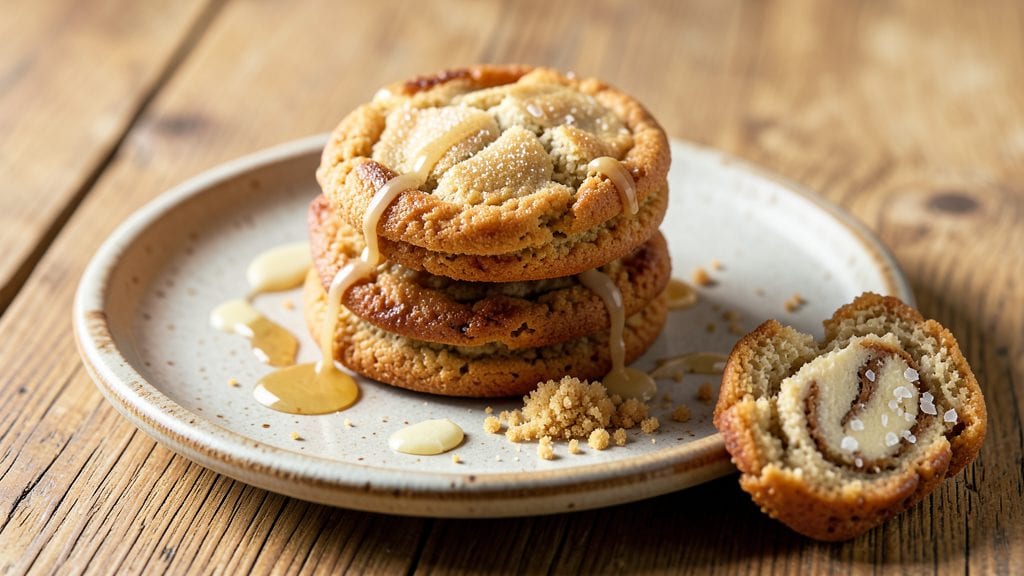
This mochiko cookie recipe delivers the perfect balance of chewy centers and delicate crispness that defines traditional Japanese rice flour cookies. The secret lies in mochiko flour, a finely milled rice flour that creates a tender yet sturdy texture unlike traditional wheat-based cookies.
I first discovered these cookies during a trip to Kyoto, where they were served warm with green tea—a moment that inspired me to recreate their delicate flavor at home.
What sets mochiko cookies apart is their unique texture: the exterior develops a subtle crunch from the rice flour, while the interior remains pillowy soft, almost like a cross between a cookie and a cake.
The recipe relies on precise ingredient ratios and gentle baking to preserve that signature texture. Unlike wheat-based cookies, mochiko cookies don't spread much, making them ideal for shaping into classic rounds or intricate cutouts.
Baking these cookies at 350°F for 10-12 minutes ensures they develop that perfect contrast—golden edges with a tender interior that melts in your mouth. The recipe includes optional variations like matcha or red bean paste for fillings, adding depth to the traditional flavor profile.
Whether you're serving them as a light dessert or sharing them with guests, these cookies bring a touch of Japanese tradition to your kitchen.
Once you try mochiko cookies, you'll understand why they're beloved across Japan—simple yet sophisticated, with a texture that's impossible to replicate with wheat flour alone. The recipe scales easily for parties, and the cookies stay fresh for days when stored properly.
Let's get started on creating these delicate, flavorful treats that taste like a piece of Japan in every bite.
Ingredients for mochiko cookie
Nine ingredients, one flour that makes all the difference. These delicate cookies bring Kyoto to your kitchen.
| Ingredient | Amount | Notes |
|---|---|---|
| Mochiko Flour 🍚 | 2 cups | Finely milled Japanese rice flour |
| Unsalted Butter 🧈 | 1 cup | Cold, cubed for texture |
| Granulated Sugar 🍚 | 1 cup | White or light brown |
| Large Eggs 🥚 | 2 whole | Room temperature for mixing |
| Vanilla Extract 🌿 | 1 tsp | Pure vanilla preferred |
| Sea Salt 🧂 | ½ tsp | Fine grain for balance |
| Powdered Sugar 🍚 | ¼ cup | For rolling and finishing |
| Green Tea Powder 🍵 | 1 tbsp | Matcha grade, optional |
| Red Bean Paste 🍡 | ½ cup | Sweet azuki, optional |
| Cornstarch 🌾 | 1 tbsp | For dough smoothness |
| Toasted Sesame Seeds 🌰 | 2 tbsp | For garnish, optional |
Mochiko flour is the star—Japanese rice flour is non-negotiable here. Mochiko brand is the gold standard, but Nishiki or Marukome work perfectly too. It’s worth hunting for at Asian grocery stores or online. The flour has a fine, silky texture that wheat flour can’t replicate. If you can only find regular rice flour, sift it extra fine—it won’t be identical, but it’ll still taste amazing. The butter needs to be cold for that signature pillowy texture, so take it out of the fridge just before mixing.
No matcha? No problem—skip it, and the cookies will still taste like delicate cloud cookies. Red bean paste adds a traditional touch, but jam or Nutella work in a pinch for fillings. The powdered sugar is for rolling between layers, but if you’re making plain cookies, just omit it. For extra flavor, add 1 tsp lemon zest to the dough. And if you’re feeling fancy, swap half the butter for cream cheese—it adds a subtle tang that pairs beautifully with the rice flour’s mild sweetness.
These cookies stay fresh for 5-6 days in an airtight container, but they’re best enjoyed within 2 days for that perfect chewy texture. Freeze the dough balls for up to 3 months—just bake straight from frozen, adding 1-2 minutes. For parties, bake half the dough, then freeze the remaining balls. The powdered sugar coating? Brush it on right after baking while the cookies are still warm. Trust me, it makes all the difference.
Why You'll Love This Recipe
- No-Fuss Dough: I swear by this recipe—just cream butter and sugar, toss in eggs, and fold in mochiko flour. No rolling, no fuss, no waiting for dough to rest. The flour’s fine texture blends like a dream, and you’re shaping cookies in minutes.
- Buttery Vanilla Bliss: That first bite? Pure comfort. The mochiko gives a delicate chew, while the browned butter edges (yes, I always bake them longer) make them irresistibly crisp. Vanilla ties it all together—warm, sweet, and just a little nostalgic.
- Party in a Jar: These are my go-to for potlucks, teacher gifts, or just because. They travel well (no crumbling!), freeze perfectly for months, and kids can even help decorate them with sprinkles. Honestly, they’ve saved me at least three holidays where I panicked about dessert.
- Budget Magic: Mochiko flour isn’t cheap, but a little goes a long way—this recipe makes 24 cookies, and they disappear fast. Butter and sugar stretch further than you’d think, and I’ve made these for years with the same pantry staples. Plus, they’re cheap enough to bake twice in one week.
Step-by-step instructions for mochiko cookies
Here's how to create these uniquely textured cookies with their signature chewy centers and delicate crunch.
Cream Butter and Sugar Until Light and Fluffy
In a stand mixer fitted with the paddle attachment, combine the 1 cup unsalted butter (cubed and cold) with the 1 cup granulated sugar. Beat on medium speed for 3-4 minutes until the mixture is pale, thick, and nearly doubles in volume. You'll notice the butter pieces become completely incorporated and the texture transforms from grainy to smooth.
This creaming process is crucial—it incorporates air that will create the cookies' signature pillowy texture. If you're using a hand mixer, work in 30-second bursts to prevent overheating. Stop occasionally to scrape down the sides of the bowl to ensure even mixing. The butter should be completely smooth with no visible lumps at this stage.
Add Eggs, Vanilla, and Dry Ingredients
Add the 2 whole large eggs one at a time, mixing well after each addition until fully combined. Then add the 1 teaspoon vanilla extract and mix for another 10 seconds. The mixture will look slightly curdled, but that's normal—it will smooth out when we add the dry ingredients.
In a separate bowl, whisk together the 2 cups mochiko flour, 0.5 teaspoon sea salt, 1 tablespoon green tea powder, and 1 tablespoon cornstarch. With the mixer on low speed, gradually add the dry ingredients to the wet mixture. Mix just until combined—you should still see small flour streaks. Overmixing develops gluten, which would make the cookies tough instead of chewy.
Fold in Red Bean Paste and Chill the Dough
Remove the bowl from the mixer and gently fold in the 0.5 cup red bean paste using a silicone spatula. The paste will be thick and slightly sticky, so work quickly to incorporate it evenly throughout the dough. You'll notice the texture becomes denser and slightly more resistant.
Divide the dough into two equal portions and flatten each into a 1-inch thick disk. Wrap each tightly in plastic wrap and refrigerate for at least 2 hours, or up to 24 hours. This chilling step is essential—it allows the mochiko flour to fully hydrate and prevents the cookies from spreading too much when baked. The dough should feel firm but still pliable when ready to use.
Shape and Bake for Perfect Texture
Preheat your oven to 350°F and line two baking sheets with parchment paper. On a lightly floured surface, roll out one portion of chilled dough to about 1/8-inch thickness. Using a 2-inch round cutter, cut out circles and transfer them to the prepared baking sheets, spacing them 2 inches apart. Gather the scraps, reroll, and cut more cookies until you've used all the dough.
Bake for 12-14 minutes until the edges are light golden brown but the centers still look slightly underdone. The mochiko flour gives these cookies their signature texture—crispy edges with a soft, almost melty center. Remove the cookies from the oven and immediately roll each one in the 0.25 cup powdered sugar mixed with 2 tablespoons toasted sesame seeds. Let them cool on the baking sheet for 5 minutes before transferring to a wire rack.
Pro Tips For Making Mochiko Cookie
- CHILL THE DOUGH: Mochiko cookies spread fast—like, "oh no, my pan is now a pancake" fast. After mixing, refrigerate the dough for at least 30 minutes (yes, even if you’re itching to bake). This firms up the butter and lets the flour absorb moisture, so your cookies stay thick and chewy instead of turning into sad, flat discs.
- WEIGH THE MOCHIKO: That flour is light—like, "I swear it’s half air" light. Scoop it straight from the bag and level it off, or you’ll end up with cookies that taste like they’re missing something. A kitchen scale makes this foolproof, but if you’re measuring by cup, press it down gently with a knife. No sifting needed—just stir it in.
- DON’T OVERMIX THE EGGS: Beat the eggs and sugar until just combined—no ribbons, no pale ribbons, no "I’m making meringue" ribbons. Overmixing adds air, and mochiko dough is already sticky enough without turning into a soufflé. Stop when the sugar dissolves and the mixture looks smooth, or your cookies will puff up like they’re trying to escape the pan.
- BAKE IN BATCHES: One tray at a time—no exceptions. Mochiko cookies release moisture like a sauna, and crowding them means the middle ones stay doughy while the edges burn. Use a parchment-lined tray, space them 2 inches apart, and rotate the pan halfway through. Trust me, your oven isn’t a microwave.
Dietary considerations for this dish
Gluten-Free Adaptation
Mochiko cookies are naturally gluten-free since they rely entirely on rice flour, making them perfect for those avoiding wheat. The mochiko brand flour is the key—it's finely milled and designed specifically for delicate textures.
If you can't find mochiko flour, Japanese sweet rice flour from brands like Nishiki or Marukome works beautifully. Just ensure it's 100% rice flour with no additives. The cookies will maintain their signature chewy centers and crisp edges without any gluten-based binders. 🌱
Vegan Substitutions
For a vegan version, replace the 1 cup unsalted butter with 1 cup vegan butter (like Miyoko's or Earth Balance) or coconut oil. Use flax eggs instead of chicken eggs—mix 2 tbsp ground flaxseed with 6 tbsp water and let sit for 5 minutes to thicken.
The dough will be slightly stickier, so handle it gently when rolling. The texture remains tender, though the edges may be slightly less crisp. For extra richness, add 1 tbsp maple syrup to the dough.
Nut-Free Considerations
This recipe is naturally nut-free, but always double-check your red bean paste and toasted sesame seeds for cross-contamination warnings. For a completely nut-free version, skip the sesame seeds and use powdered sugar alone for rolling.
If you want extra crunch, try crushed freeze-dried strawberries or toasted coconut flakes instead. The cookies will still taste delicate and chewy, just with a different texture profile.
Dairy-Free Options
To make these cookies dairy-free, swap the butter for coconut oil or a dairy-free margarine like Earth Balance. The texture stays tender, though the flavor will be slightly more neutral. For a richer taste, use vegan cream cheese (like Kite Hill) in place of half the butter.
The dough will be slightly softer, so chill it an extra 30 minutes before shaping. The final cookies will have a subtle coconut aroma if using coconut oil, which pairs beautifully with the rice flour's mild sweetness.
Allergen-Friendly Tips
For those with multiple allergies, this recipe is surprisingly versatile. The base is already free from top allergens like wheat, dairy, and nuts. If you're avoiding eggs, the flax egg substitution works well (see vegan section). For soy allergies, use a soy-free red bean paste or omit it entirely.
The cookies will still be delicious with just the basic ingredients. Always check labels on vanilla extract and sea salt for hidden allergens like tree nuts or dairy derivatives.
Nutrition facts
Frequently asked questions
Why do mochiko cookies have that unique texture?
The signature chewy centers and crispy edges come from mochiko flour, a finely milled Japanese rice flour. Unlike wheat flour, it contains no gluten, creating a tender yet sturdy cookie structure. The cold butter and precise baking at 350°F for 12-14 minutes ensure the exterior sets while the center stays soft and pillowy. This texture is what makes them so different from traditional wheat-based cookies!
Can I substitute mochiko flour with regular rice flour?
Regular rice flour won't work the same way—mochiko is specially milled to be ultra-fine and silky. If you can't find mochiko, try Japanese sweet rice flour (like Nishiki or Marukome) as a close substitute. Sift it extra fine and expect slightly less delicate texture, but the cookies will still be delicious. Never use regular white rice flour, as it's too coarse and won't create the same tender crumb.
How do I prevent my mochiko cookies from spreading too much?
Overmixing the dough or skipping the 2-hour chill are the main culprits. Always mix just until combined (small flour streaks are fine), and never overwork the dough. The chill step is crucial—it allows the rice flour to fully hydrate and prevents excessive spreading. Also, use a light hand when rolling the dough to 1/8-inch thickness. Bake at 350°F for 12-14 minutes—any longer and they'll dry out.
What's the best way to store mochiko cookies?
Keep them fresh for 5-6 days in an airtight container at room temperature. For longer storage, freeze the dough balls (unbaked) for up to 3 months—bake straight from frozen, adding 1-2 minutes to the baking time. Never store them in the fridge, as condensation will make them soggy. The powdered sugar coating helps preserve freshness, so add it right after baking while the cookies are still warm.
Can I make mochiko cookies without red bean paste?
The red bean paste adds flavor but isn't essential. For a classic version, simply omit it—the cookies will still have their signature texture. If you want to experiment, try jam, Nutella, or even crushed freeze-dried fruit for a fruity twist. The dough's texture remains the same; only the filling changes. For a matcha version, add 1 tbsp green tea powder to the dry ingredients.