
Desserts
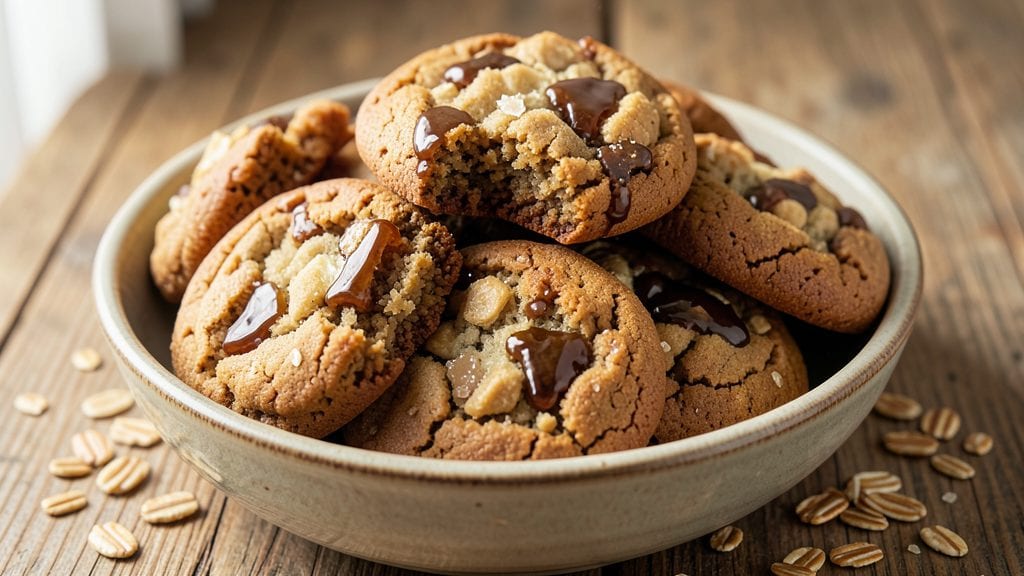
This old-fashioned Quaker oats cookie recipe delivers the perfect chewy texture that comes from toasted oats and rich brown sugar—exactly what makes these cookies legendary. The secret lies in the balance of ingredients and the slow baking process that creates that signature tender crunch.
After years of testing variations, I've perfected a method that ensures every batch turns out with that classic oatmeal cookie flavor and satisfying bite.
The recipe relies on a few key elements: old-fashioned rolled oats (not quick oats), dark brown sugar for depth, and a precise baking time to develop the chewy texture.
Unlike many modern cookie recipes, this one skips shortcuts like buttercream or excessive mixing, focusing instead on simple ingredients that work together naturally. The result is a cookie with a tender, almost cake-like center and a slightly crisp edge that gives way to that signature chewiness.
What makes these cookies truly special is how they improve with age—even better the next day when the flavors have fully melded. The combination of toasted oats and brown sugar creates a rich, caramel-like sweetness that pairs perfectly with a hint of vanilla.
Whether you're baking for a holiday gathering or just craving a classic treat, these cookies deliver that nostalgic flavor that's hard to find in modern desserts.
Once you try this recipe, you'll understand why these have been a family favorite for generations. The method is straightforward, but the results are anything but ordinary. Let's get started with a batch that will have everyone asking for the recipe.
Ingredients for old fashioned quaker oats cookie
Twelve simple ingredients transform into cookies with legendary chewy texture and nostalgic flavor.
| Ingredient | Amount | Notes |
|---|---|---|
| Old-Fashioned Rolled Oats 🌾 | 2 cups | Not quick oats, toasted lightly |
| Unsalted Butter 🧈 | 1 cup | Cold, cubed for mixing |
| Dark Brown Sugar 🍚 | 1 cup | Packed, not lightly spooned |
| Light Brown Sugar 🍚 | ½ cup | Packed, for balanced sweetness |
| Large Eggs 🥚 | 2 whole | Room temperature for blending |
| Pure Vanilla Extract 🍯 | 2 tsp | High-quality, not imitation |
| All-Purpose Flour 🌾 | 2 cups | Spooned and leveled |
| Baking Soda 🧪 | ½ tsp | For lift and texture |
| Fine Sea Salt 🧂 | ½ tsp | Kosher or table salt |
| Ground Cinnamon 🍃 | 1 tsp | Freshly ground preferred |
| Ground Nutmeg 🌿 | ¼ tsp | Freshly grated for warmth |
| Granulated White Sugar 🍚 | ¼ cup | For crisp edges |
The oats are non-negotiable—old-fashioned rolled oats create that signature chew, while quick oats turn gummy. Toast them lightly in a dry pan for 3-4 minutes until fragrant, then cool completely before mixing. Bob's Red Mill or Quaker Old Fashioned are reliable brands, but any rolled oats will work if labeled 'old-fashioned.' For the sugars, dark brown sugar provides depth, while the light brown sugar balances it. Pack them firmly into your measuring cup to avoid air pockets that affect texture. The butter should be cold and cubed to prevent overmixing the dough.
No dark brown sugar? Substitute light brown sugar plus 1 tbsp molasses for depth. Short on vanilla? Vanilla bean paste adds intensity, or use almond extract at half the amount. The cinnamon and nutmeg can be swapped for pumpkin pie spice at 1.5 tsp, but freshly ground spices always taste better. For a softer cookie, reduce the white sugar to 2 tbsp. If you're baking at high altitude, add 1 tbsp extra flour and reduce baking time by 2-3 minutes. The dough will be thick—don't overmix, just combine until just combined.
Store cookies in an airtight container at room temperature for up to 5 days, though they're best within 2 days for peak chewiness. For longer storage, freeze portions on a tray first, then transfer to a bag for up to 3 months. Reheat in a 350°F oven for 3-5 minutes to restore freshness. These cookies improve overnight as the flavors meld—double batches are worth it. Keep them away from humidity to prevent sogginess, and use parchment paper between layers if stacking.
Why You'll Love This Recipe
- No Mixer Needed: I swear by this recipe when my mixer’s on the fritz—just cream butter and sugars with a wooden spoon until it’s almost fluffy. The oats handle the texture work for you, so no one’s standing there beating dough like a mad scientist.
- Chewy Crunch Core: That buttery, caramelized edge from the brown sugars? It’s the star. But the moment you bite in, the center stays soft—like a hug from your grandma’s kitchen. Honestly, the first time I made these, I ate a whole batch before they even cooled.
- Pantry Stash Magic: Between us, this recipe’s my secret weapon for when I’ve got nothing but oats, butter, and sugar. No fancy add-ins, no last-minute grocery runs—just pull what you’ve got, toss it in, and boom. (Yes, even on a Tuesday night.)
- Lasts All Week: These cookies don’t go stale fast, and they’re perfect for sneaking into lunches or tossing in a jar for work. I’ve had them for days, and they still taste like they just came out of the oven—crispy enough to satisfy but soft enough to melt in your mouth.
Step-by-step instructions for old fashioned Quaker oats cookies
Here's the method for chewy, toasty oat cookies with perfect texture every time.
Toast the Old-Fashioned Rolled Oats
Preheat your oven to 350°F. Spread the 2 cups of old-fashioned rolled oats on a rimmed baking sheet in a single layer. Toast for 8-10 minutes, stirring once halfway, until they turn a deep golden brown and smell nutty. This step develops their flavor and prevents them from absorbing too much moisture later.
Watch closely—they'll darken quickly. Remove them as soon as they're fragrant and golden, then let cool completely on the sheet before using. This toasting creates the signature chewy texture these cookies are known for. Don't skip it; it makes all the difference in the final result.
Cream Butter and Sugars Together
In a large mixing bowl, combine the 1 cup of cold, cubed unsalted butter, 1 cup of packed dark brown sugar, and 0.5 cup of packed light brown sugar. Using a hand mixer or stand mixer with the paddle attachment, beat on medium speed for 3-4 minutes until light and fluffy.
You'll notice the mixture nearly doubles in volume and becomes pale. This creaming process incorporates air, which creates those beautiful crackly tops and helps the cookies spread just enough. Scrape down the sides of the bowl occasionally to ensure even mixing. The butter should be completely smooth with no visible lumps.
Add Eggs and Vanilla
Add the 2 whole large eggs one at a time, mixing well after each addition until fully incorporated. Then add the 2 teaspoons of pure vanilla extract and mix for another 30 seconds. The mixture will look slightly thicker and more cohesive.
This is where the dough starts coming together. The eggs bind everything while the vanilla adds depth of flavor. Don't overmix at this stage—just until everything is combined. If you see any streaks of flour, that's fine; we'll incorporate the dry ingredients next.
Combine Dry Ingredients
In a separate bowl, whisk together the 2 cups of all-purpose flour, 0.5 teaspoon of baking soda, 0.5 teaspoon of fine sea salt, 1 teaspoon of ground cinnamon, and 0.25 teaspoon of ground nutmeg. Gradually add this mixture to the wet ingredients, mixing on low speed until just combined.
Be careful not to overmix—the dough should come together but still appear slightly crumbly. Add the 0.25 cup of granulated white sugar and mix briefly to distribute. Then fold in the cooled toasted oats by hand using a spatula. The dough will be thick and sticky, but that's exactly what we want for chewy cookies.
Chill the Dough
Cover the bowl with plastic wrap and refrigerate for at least 1 hour, or up to 24 hours. This chilling step is crucial—it allows the flour to fully hydrate and prevents the cookies from spreading too much in the oven. The dough will firm up significantly during this time.
For best results, let the dough rest overnight in the refrigerator. This enhances the flavor development and ensures perfect texture. When you're ready to bake, remove the dough from the fridge and let it sit at room temperature for 10-15 minutes before scooping.
Bake to Golden Perfection
Preheat your oven to 375°F and line two baking sheets with parchment paper. Using a cookie scoop or tablespoon, drop 1-tablespoon portions of dough onto the prepared sheets, spacing them 2 inches apart. They won't spread much, so you can place them closer together.
Bake for 10-12 minutes until the edges are deep golden brown and the centers look slightly underdone. The tops should be crackly, not flat. Rotate the baking sheets halfway through for even baking. Let the cookies cool on the baking sheets for 5 minutes before transferring to a wire rack to cool completely.
Pro Tips For Making Old Fashioned Quaker Oats Cookie
- Pulse Oats Coarse: Skip the blender—use a food processor to pulse the old-fashioned oats just until they’re finely chopped but not powdered. I learned this the hard way: fully pulverizing them turns these cookies into dense, cakey bricks instead of chewy, crumbly bites.
- Cream Butter Cold: Whip the unsalted butter with the sugars until it’s light and fluffy, but don’t let it get warm. If it melts, the cookies spread like pancakes. I used to rush this step, and the results were always sad—now I take my time and keep the bowl chilled.
- Chill the Dough: Wrap the dough in plastic and refrigerate it for at least 2 hours—overnight is even better. This isn’t just about easier scooping; it lets the oats soften slightly so the cookies hold their shape and don’t turn out greasy. (Yes, even if you’re impatient like me.)
- Use Room-Temp Eggs: Let the large eggs sit out for 30 minutes before mixing them in. Cold eggs can cause the butter to seize up, and you’ll end up with a dough that fights you every step of the way. Trust me, your cookies will be better for the wait.
Creative variations of this old fashioned quaker oats cookie
Spiced Orange Twist
Add 1 teaspoon of orange zest and 1 tablespoon of fresh orange juice to the wet ingredients for a bright, citrusy twist. The orange zest pairs beautifully with the cinnamon and nutmeg, adding a zesty contrast to the rich brown sugar.
I like to use Valencia oranges for their sweet, fragrant peel. 🍊
Chocolate Chip Upgrade
Fold in 1 cup of semi-sweet chocolate chips or chopped dark chocolate after mixing the dry ingredients. For an extra indulgent version, use a mix of chocolate chunks and white chocolate chips.
The chocolate melts slightly during baking, creating pockets of gooey goodness that contrast the chewy texture. Use Ghirardelli baking chips for the best quality.
Nutty Crunch Addition
Stir in 1 cup of chopped pecans or walnuts along with the toasted oats for added texture. Toast the nuts separately in a dry pan for 3-4 minutes until fragrant before mixing.
The nuts add a satisfying crunch that balances the soft cookie base. I prefer pecans for their buttery flavor, but hazelnuts work beautifully too.
Maple Brown Sugar Swap
Replace half of the brown sugar with ½ cup of maple syrup for a deeper, more complex flavor profile. The maple adds a subtle earthiness that complements the vanilla and spices.
Use Grade B maple syrup for its richer taste. This variation works especially well with the orange twist variation, creating a fall-inspired cookie. 🍁
Caramelized Onion Topping
Sprinkle 2 tablespoons of caramelized onion jam over the tops of the cookies right after baking. The sweet, jammy onions add a sophisticated flavor that pairs perfectly with the chewy texture.
You can make your own by caramelizing 2 cups of diced onions with 1 tablespoon of brown sugar and 1 tablespoon of apple cider vinegar, then simmering until thickened.
Gluten-Free Adaptation
Substitute the all-purpose flour with a 1:1 gluten-free baking flour blend like Bob's Red Mill 1-to-1. Add ½ teaspoon of xanthan gum to help bind the dough. These cookies will be slightly denser but still maintain that signature chewy texture.
For best results, use King Arthur Measure for Measure flour blend, which is designed specifically for baking.
Nutrition facts
Frequently asked questions
Why do these oat cookies need toasting?
Toasted oats create the signature chewy texture by removing excess moisture and deepening their nutty flavor. When toasted to golden brown, they prevent the cookies from becoming gummy while adding that satisfying bite. Skipping this step results in softer, less flavorful cookies that lack the classic oatmeal cookie experience.
Can I substitute quick oats for old-fashioned rolled oats?
No—quick oats are too soft and will make your cookies dense and gummy. Old-fashioned rolled oats have a firmer texture that holds up during baking, creating that perfect chewy center. If you only have quick oats, pulse them in a food processor until they resemble coarse crumbs, but the flavor won't be the same.
How do I prevent my cookies from spreading too much?
Chill the dough for at least 1 hour before baking—this firms up the butter and flour for better structure. Also, use cold butter when creaming and avoid overmixing. Bake at 375°F for 10-12 minutes until edges are golden, then remove them promptly to maintain shape.
What's the best way to store these cookies?
Keep them in an airtight container at room temperature for up to 5 days, though they're best within 2 days for peak chewiness. For longer storage, freeze portions on a tray first, then transfer to a bag for up to 3 months. Reheat in a 350°F oven for 3-5 minutes to restore freshness.
Can I make these cookies without an egg?
Yes! Replace the 2 eggs with 2 tablespoons of ground flaxseed mixed with 6 tablespoons of water (let sit for 5 minutes to thicken). For a richer texture, use ½ cup unsweetened applesauce instead. The dough will be slightly softer, but the chewy texture remains intact.