
Desserts
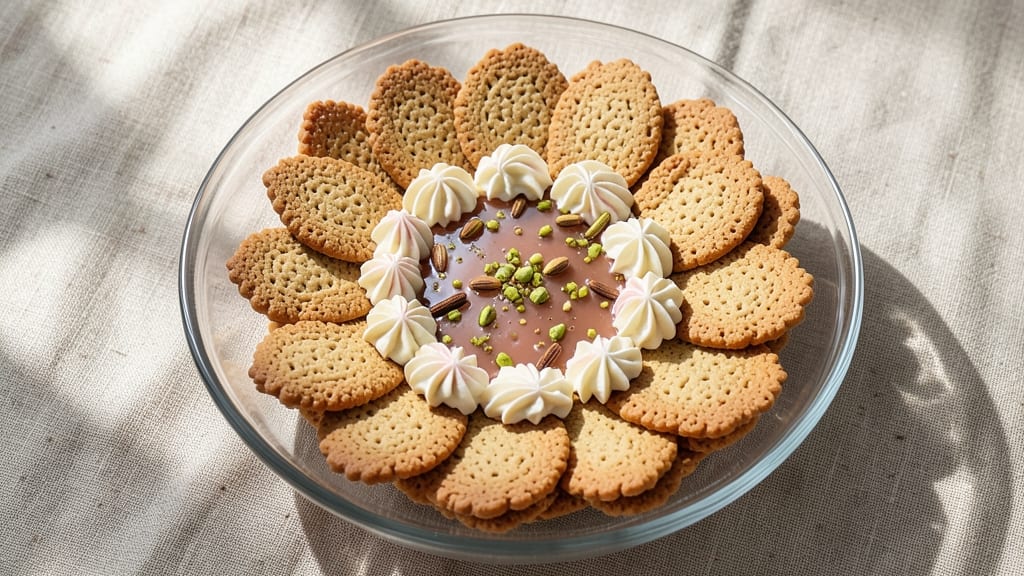
This Persian cookies recipe brings the delicate balance of cardamom, rosewater, and pistachios to your kitchen, creating a crunchy yet tender treat that tastes like a piece of Iran. The secret lies in the precise ratio of ground cardamom and rosewater, which transform simple ingredients into something extraordinary.
I first discovered these cookies in a small Tehran bakery, where the aroma alone made me crave another bite.
What makes these cookies truly special is their layered texture—crispy on the outside, soft in the center—achieved through a foolproof technique of chilling the dough and baking in thin sheets.
Traditional recipes like Badam Poli (almond) or Nokhodchi (pistachio) can be easily adapted here, but the cardamom-spiced version remains a classic. The pistachios add a satisfying crunch, while the rosewater infuses every bite with floral warmth.
By the time these cookies emerge from the oven, your kitchen will smell like sunshine and spice, and your taste buds will thank you for the perfect blend of sweet, aromatic, and nutty flavors.
They’re ideal for gifting, holiday gatherings, or simply enjoying with a cup of Persian tea. Let’s get baking—these cookies are worth every minute of effort.
For those who love experimenting, try adding a touch of orange blossom water or swapping pistachios for hazelnuts. The variations are endless, but the foundation remains the same: simple ingredients, precise technique, and a dash of cultural magic. Here’s how to make them.
Ingredients for persian cookies
Simple pantry staples transform into aromatic Persian magic with these cardamom-spiced cookies.
| Ingredient | Amount | Notes |
|---|---|---|
| All-Purpose Flour 🌾 | 2 ½ cups | Sifted for even texture |
| Unsalted Butter 🧈 | 1 cup | Cold, cubed for chilling dough |
| Granulated Sugar 🍚 | 1 cup | Superfine preferred for smoothness |
| Ground Cardamom 🌿 | 1 ½ tbsp | Freshly ground for best aroma |
| Rosewater 🌸 | 1 tbsp | Pure, food-grade quality |
| Vanilla Extract 🌸 | 1 tsp | Pure vanilla for authentic flavor |
| Pistachios 🥜 | 1 cup | Shelled, chopped for crunch |
| Large Egg 🥚 | 1 whole | Room temperature for blending |
| Salt 🧂 | ¼ tsp | Fine sea salt for balance |
| Baking Powder 🍞 | ½ tsp | For light texture |
| Orange Blossom Water 🍊 | ½ tsp | Optional, for floral depth |
| Powdered Sugar 🍚 | ½ cup | For dusting finished cookies |
The cardamom is non-negotiable here—Penzeys or Middle Eastern specialty stores carry the best ground variety. Look for vibrant green pods; the seeds should smell intensely floral and citrusy. Rosewater is trickier: Trader Joe's or Middle Eastern markets stock pure, food-grade bottles. Avoid perfumery versions—they’re too strong. For pistachios, unsalted, shelled is key. I grab mine from Costco in bulk, but any natural food store will have a good selection. The butter needs to be cold for chilling the dough properly—don’t skip this step. Pro tip: freeze your butter cubes for 15 minutes before mixing if your kitchen runs warm.
No cardamom? Cinnamon at half the amount gives a different but still lovely flavor. Short on rosewater? Orange blossom water at double the amount works, though the floral profile shifts. Pistachios too expensive? Hazelnuts or almonds hold up beautifully—just toast them first for extra depth. The orange blossom water is optional but worth it if you can find it. For a nut-free version, omit the pistachios and add extra powdered sugar for sweetness. And if you’re feeling adventurous, swap half the pistachios for crushed dried rose petals (food-grade only!) for a floral surprise.
These cookies keep for 5-7 days in an airtight container, but they’re best enjoyed within 2 days for maximum crunch. For gifting, bake them a day ahead and store in layers with parchment paper between each batch. They freeze beautifully for up to 3 months—just thaw at room temperature before serving. I like to portion the dough into small discs, chill them on a tray, then transfer to containers. That way, you can bake just what you need without thawing the whole batch.
Why You'll Love This Recipe
- No-Fuss Dough: I swear, this dough comes together in five minutes—just mix, chill, roll. No stand mixer, no fancy techniques, just butter, flour, and a pinch of cardamom that works magic.
- Floral Magic: That rosewater isn’t just a garnish—it’s the star. One whiff and you’re transported, but don’t worry, it’s subtle enough that even skeptics won’t question why they’re reaching for seconds.
- Party or Snack: These cookies are my secret weapon for holidays, potlucks, or just a lazy afternoon. They freeze like champs, so I can bake a batch and pull them out whenever I need a crowd-pleaser.
- Budget Luxury: Butter and sugar make them feel special, but the real win? A single jar of rosewater and a tiny spice bottle stretch to dozens of batches. Fancy flavor, zero guilt.
Step-by-step instructions for cardamom-spiced Persian cookies
Here's how to craft these aromatic Persian cookies with perfect texture and floral depth.
Create the Spiced Butter Base
In a medium bowl, combine the 1 cup Unsalted Butter (cold and cubed) with the 1 cup Granulated Sugar. Using a hand mixer or stand mixer fitted with the paddle attachment, beat on medium speed for 3-4 minutes until the mixture is light and fluffy. This process incorporates air, which will create a tender cookie texture.
In a small bowl, whisk together the 1.5 tbsp Ground Cardamom, 1 tbsp Rosewater, 1 tsp Vanilla Extract, 0.5 tsp Orange Blossom Water, and 0.25 tsp Salt. Gradually add this spiced mixture to the butter-sugar blend while mixing on low speed. The dough should become fragrant and develop a rich, golden hue. This is where the authentic Persian flavor profile begins to emerge.
Incorporate the Dry Ingredients
In a separate bowl, sift together the 2.5 cups All-Purpose Flour and 0.5 tsp Baking Powder. This ensures an even distribution of leavening throughout the dough. With the mixer still running on low speed, gradually add the flour mixture to the wet ingredients, mixing just until combined. Avoid overmixing—you should still see small flour streaks in the dough.
Once combined, remove the bowl from the mixer and use a silicone spatula to fold in the 1 cup chopped Pistachios. The dough will appear shaggy and uneven, but don't worry—this is normal. The pistachios should be evenly distributed throughout. If the dough feels too sticky, you can gently press it together with your hands to form a cohesive mass.
Chill the Dough for Perfect Texture
Divide the dough into 4 equal portions and flatten each into a 1-inch thick disk. Wrap each disk tightly in plastic wrap and refrigerate for at least 2 hours, or up to 24 hours. This chilling step is crucial—it allows the flour to fully hydrate, prevents excessive spreading during baking, and ensures those signature crisp edges and tender centers.
I like to chill my dough overnight for maximum flavor development. The longer it rests, the more the cardamom and rosewater aromas will meld together. When ready to bake, remove the dough from the refrigerator and let it sit at room temperature for 10-15 minutes before rolling. This makes it easier to handle without sticking.
Roll and Cut for Uniform Cookies
Preheat your oven to 350°F and line two baking sheets with parchment paper. On a lightly floured surface, roll out one of the chilled dough disks to about 1/8-inch thickness. Use a 2.5-inch round cutter to cut out circles, gently re-rolling the scraps and cutting additional cookies until you've used all the dough. You should get about 24 cookies from each disk.
Place the cut cookies on the prepared baking sheets, spacing them about 1 inch apart. For extra flavor, you can lightly brush the tops with a bit more rosewater or sprinkle with a pinch of ground cardamom. The cookies will spread slightly during baking, so don't worry if they look a bit crowded on the sheet.
Bake to Golden Perfection
Bake the cookies for 12-14 minutes, rotating the sheets halfway through, until the edges are golden brown and the centers look just slightly underdone. The cookies should pull away from the edges of the cutter marks but still feel soft in the center. Overbaking will result in dry cookies, so keep a close eye on them.
Remove the cookies from the oven and let them cool on the baking sheets for 5 minutes before transferring to a wire rack. While still warm, dust the tops generously with the 0.5 cup Powdered Sugar using a fine-mesh sieve. This creates that signature Persian cookie finish—slightly sweet, delicate, and perfectly balanced with the cardamom's warmth.
Pro Tips For Making Persian Cookies
- Chill the Dough: DESCRIPTION: Persian cookies spread hard—I learned this after my first batch turned into a sad, flat pancake. Wrap the dough in plastic and refrigerate for at least 1 hour (overnight is better). The cold butter resists melting, so your cookies hold their shape and stay crisp.
- Use Cold Butter: DESCRIPTION: Cut the butter straight from the fridge into small cubes—no softening, no exceptions. I used to melt it first, and the cookies lost their signature crunch. Cold butter creates pockets of fat that bake into flaky layers, not greasy messes.
- Measure Rosewater Precisely: DESCRIPTION: Too much rosewater makes these cookies taste like perfume; too little wastes the flavor. Use 1 teaspoon (not tablespoons!) for the full batch. If your bottle lacks measurements, a standard teaspoon is your friend—no guessing.
- Bake in Batches: DESCRIPTION: Crowd the tray, and your cookies turn out greasy and uneven. Spread them 2 inches apart (yes, it looks sparse) and bake in single layers. The first batch will teach you the perfect oven temp—usually 350°F for 12–15 minutes, but watch closely after 10.
Regional styles of these flavors
Tehran Classic
In Tehran, these cookies are often made with saffron-infused sugar instead of plain granulated sugar—a subtle but luxurious twist. I've seen bakeries use ½ tsp saffron threads steeped in ¼ cup warm water for 10 minutes, then strained and mixed into the butter-sugar base.
The saffron adds a delicate golden hue and earthy depth that pairs beautifully with the cardamom. For an authentic touch, finish with a sprinkle of edible gold leaf before dusting powdered sugar. 🌟
Isfahan's Nokhodchi
The city of Isfahan is famous for Nokhodchi, a pistachio-heavy version where the nuts make up 30% of the dough weight. Use 1.5 cups chopped pistachios and reduce flour to 2 cups for a denser, more nut-forward cookie.
Isfahan bakers often add 1 tsp ground cinnamon alongside the cardamom for warmth. The secret here is toasting the pistachios first—350°F for 8-10 minutes—to intensify their flavor before mixing into the dough.
Shiraz's Badam Poli
Shiraz's Badam Poli ("almond cookies") swaps pistachios for 1.5 cups finely ground almonds, creating a smoother, more elegant cookie. The dough gets a ½ tsp almond extract for extra depth, and bakers often roll it slightly thicker (⅛-inch to ¼-inch) for a cake-like texture.
For presentation, cut shapes like stars or crescents using a 3-inch cutter, then dust with powdered sugar in intricate patterns. These cookies are traditionally served at Nowruz celebrations.
Yazd's Spiced Version
In Yazd, you'll find a warmer, more robust take with 1 tsp ground ginger and ½ tsp black cardamom alongside the green. The dough includes 2 tbsp honey instead of some sugar for moisture, and bakers often add 1 tbsp poppy seeds for texture.
These cookies have a darker, almost caramelized edge when baked at 375°F for 10-12 minutes. Perfect with Persian mint tea for a refreshing contrast.
Modern Portland Twist
For a Pacific Northwest adaptation, I've experimented with local hazelnuts from Oregon's Willamette Valley, toasted and chopped. Swap pistachios for 1.5 cups hazelnuts and add 1 tsp vanilla bean paste (instead of extract) for richness.
Use 1 tbsp rosewater and ½ tsp orange blossom water together for a brighter floral note. These cookies pair wonderfully with local honey for dipping—try Wildflower Honey from Portland's farmers markets. 🌿
Kurdish Cardamom Crunch
Kurdish bakers often make these cookies thicker and chewier, using 1.5 cups flour and adding 2 tbsp cornstarch for structure. The dough gets 1 tsp ground fenugreek seeds (toasted first) for a maple-like sweetness.
For extra crunch, sprinkle ½ cup crushed pistachios on top before baking. These cookies are traditionally served with Persian black tea and dates for dipping—a perfect balance of sweet, nutty, and herbal flavors.
Nutrition facts
Frequently asked questions
Can I substitute rosewater if I can't find it?
Use 1.5 teaspoons orange blossom water as a direct substitute, or try ½ teaspoon vanilla extract plus ½ teaspoon almond extract for a floral note. For a citrus twist, 1 teaspoon lemon zest mixed with ½ teaspoon lemon extract works surprisingly well. Just remember these alternatives will change the flavor profile slightly.
Why do these cookies need to chill overnight?
The chilling step is key for three reasons: it prevents spreading, lets flavors meld, and creates that perfect crisp-tender texture. When cold, the butter solidifies, keeping cookies from flattening. The longer it rests, the more aromatic the cardamom and rosewater become. For best results, chill at least 2 hours, but overnight gives the deepest flavor. Pro tip: chill the dough between layers of parchment paper for easier handling.
What's the secret to getting that perfect crunch?
Three things: cold butter, proper thickness (1/8-inch dough), and immediate cooling. Roll the dough thin, bake on middle oven racks, and transfer cookies to a wire rack right after baking. For extra crunch, sprinkle powdered sugar while still warm. Avoid stacking cookies—they'll lose crispness faster.
Can I make these cookies nut-free?
Yes! Simply omit the pistachios and increase powdered sugar to ¾ cup for sweetness. For texture, add ½ cup crushed cornflakes or 1 cup flaked coconut (toasted for 5 minutes). The dough will be slightly less dense but still delicious. For a seed option, try 1 cup pumpkin seeds (toasted and chopped).
How do I store these cookies to keep them fresh?
Store in an airtight container at room temperature for 5-7 days. For longer storage, freeze baked cookies between layers of parchment paper for up to 3 months. To revive, warm at 300°F for 3-5 minutes. Avoid refrigerating—they'll lose crispness. For gifting, package in cellophane bags with a dusting of powdered sugar.