
Desserts
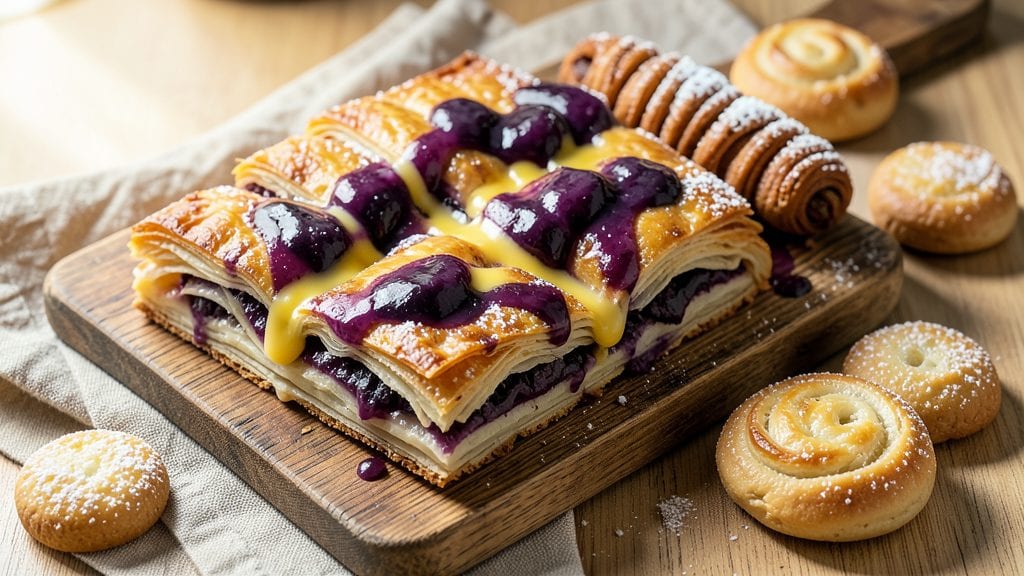
This Philippine cookies recipe brings the nostalgic sweetness of ube and the comforting richness of cheese into every bite—perfect for holidays or everyday treats. The secret lies in the buttery dough, infused with vibrant purple yam, and twisted into delicate shapes that bake to golden perfection.
I’ve perfected this version after years of baking for Filipino celebrations, where these cookies are a staple at gatherings.
The dough combines all-purpose flour, margarine, sugar, and a touch of salt, rolled thin and cut into festive twists before baking at 350°F for about 12-15 minutes.
The egg wash gives them that signature glossy finish, while the ube adds a natural sweetness that pairs beautifully with the mild cheddar. No latik here, but the buttery richness still delivers that classic Filipino comfort.
What you’ll end up with is a batch of tender, slightly crisp-edged cookies with a melt-in-your-mouth texture and a subtle purple hue from the ube. The cheese adds depth, balancing the sweetness, while the twists give them an elegant, festive look.
These are the kind of cookies that disappear fast—perfect for sharing or stashing in jars for guests.
Serve warm with a cup of tsokolate (Filipino hot chocolate) or alongside pandesal for breakfast. The recipe scales easily, so double the batch for parties or meal prep. Let’s get baking!
Ingredients for philippine cookies
Buttery dough meets vibrant ube and cheddar for cookies that taste like Filipino holiday magic.
| Ingredient | Amount | Notes |
|---|---|---|
| All-Purpose Flour 🌾 | 2 ½ cups | Sifted for light texture |
| Unsalted Margarine 🧈 | 1 cup | Cold, cut into cubes |
| Granulated Sugar 🍚 | 1 cup | Superfine preferred for smoothness |
| Ube Halaya 💜 | ½ cup | Store-bought or homemade |
| Mild Cheddar Cheese 🧀 | ½ cup | Shredded, not pre-shredded |
| Large Eggs 🥚 | 1 whole | Room temperature for even mixing |
| Vanilla Extract 🌸 | 1 tsp | Pure, not imitation |
| Salt 🧂 | ½ tsp | Diamond Crystal preferred |
| Powdered Sugar 🍚 | ¼ cup | For egg wash |
| Milk 🥛 | 1 tbsp | Whole milk for richness |
The ube halaya is non-negotiable here—store-bought works fine, but homemade gives deeper flavor. Filipino markets or Asian grocery stores have the best options, but check the label for pure ube with no artificial colors. The margarine? Cold and cubed is key—it creates those tender layers. I always grab Parkay or Imperial from the international aisle, but any good-quality margarine does the trick. For the cheddar, shred it yourself—pre-shredded has anti-caking agents that make the cookies dry. The flour? King Arthur or Gold Medal are my go-tos, but any all-purpose will work.
No ube halaya? Mango puree or purple sweet potato puree can mimic the vibrancy (though flavor will differ). Short on cheddar? Gouda or mild white cheddar works too. The vanilla extract matters—imitation won’t cut it. If you’re out, a vanilla bean scraped into 1 tsp sugar works in a pinch. The powdered sugar in the egg wash? Don’t skip it—it gives that signature glossy finish. And if you’re scaling up, add an extra egg to keep the dough from getting too dry.
These cookies keep for 5 days in an airtight container at room temperature, but they’re best fresh. Freeze the dough balls if prepping ahead—bake straight from frozen, adding 2-3 minutes. The ube flavor intensifies slightly after baking, so taste one before packing them away. Store in layers with parchment paper to prevent sticking. Perfect for gifting—just wrap in cellophane with a ribbon for that festive touch.
Why You'll Love This Recipe
- No-Fuss Mixing: I swear by this recipe because it’s just flour, butter, and sugar—no eggs, no fuss. You’ll have dough ready in 10 minutes while the ube halaya and cheese add that signature richness without extra steps.
- Ube-Cheddar Magic: That purple swirl of ube halaya and sharp cheddar? It’s like a dessert-meets-savory hug. The margarine keeps them tender, but the cheese gives them a little bite that makes them disappear fast.
- Party or Snack: Between us, these work for everything—holiday gifts, lunchboxes, or just a quick afternoon treat. The dough stays stable, so you can shape them ahead and bake later (hello, stress-free gatherings).
- Budget Baking Wins: Margarine and flour stretch far, and ube halaya lasts weeks in the fridge. I make a double batch, freeze half, and still have cookies ready in minutes—no wasted ingredients, just pure satisfaction.
Instructions for buttery ube and cheese twists
These twists come together in just a few steps—creamy ube and sharp cheddar create the perfect balance, while the margarine keeps them rich and tender.
Cut and Chill the Margarine
Take the 1 cup unsalted margarine from the fridge and cut it into ½-inch cubes. This chilling step is crucial—it prevents the dough from becoming too soft when you mix everything together. Place the cubes in the freezer for 5 minutes while you prepare the other ingredients. Cold margarine creates flaky, layered texture in the final twists, just like in traditional Filipino pastries.
I like to use a sharp chef’s knife for this—it gives you clean, even cubes that melt smoothly into the dough. If your margarine feels too soft after 5 minutes, pop it back in the freezer for another minute or two. The goal is for it to hold its shape when pressed gently but still be workable when mixed.
Mix Dry Ingredients and Cream Wet Components
In a large mixing bowl, whisk together the 2.5 cups all-purpose flour, 0.5 cup mild cheddar cheese, 0.5 tsp salt, and 0.5 cup ube halaya. The ube halaya will add a vibrant purple hue and that signature sweet, nutty flavor. Use a whisk to break up any cheese clumps—you want everything evenly distributed before adding the wet ingredients.
In a separate bowl, beat the 1 whole large egg with the 1 cup granulated sugar and 1 tsp vanilla extract until just combined. This mixture should be smooth but not overly aerated—you’re not making a cake here. Add the chilled margarine cubes to the wet ingredients and use a fork to break them into smaller pieces before incorporating them into the dry mixture.
Combine and Knead the Dough
Gradually add the wet mixture to the dry ingredients, mixing with a wooden spoon or dough scraper until a shaggy dough forms. Once combined, turn the dough out onto a lightly floured surface and knead gently for 3-4 minutes until smooth and elastic. The dough should be soft but not sticky—if it feels too dry, add 1 tbsp milk a little at a time until it comes together nicely.
This kneading step develops the gluten just enough to give the twists structure without making them tough. Wrap the dough in plastic wrap and refrigerate for at least 1 hour. Chilling firms up the margarine again, which is key for those beautiful flaky layers when you roll and twist the dough later.
Roll, Twist, and Shape the Cookies
Preheat your oven to 350°F and line two baking sheets with parchment paper. On a lightly floured surface, roll the chilled dough into a ¼-inch thick rectangle, about 12x18 inches. Using a sharp knife or pizza cutter, slice the rectangle into 1-inch wide strips. Here’s the fun part—take each strip and gently twist it into a spiral shape, pinching the ends to seal.
Place the twists on the prepared baking sheets, leaving 2 inches of space between each one. They’ll spread slightly as they bake. For extra shine and sweetness, brush the tops with a mixture of 0.25 cup powdered sugar and 1 tbsp milk whisked together. This egg wash gives them that professional bakery finish.
Bake to Golden Perfection
Bake the twists for 12-15 minutes until the edges are golden brown and the centers look just slightly underdone. They’ll firm up as they cool, so don’t overbake—they should pull away from the parchment paper easily when you lift them. For even baking, rotate the sheets halfway through if your oven has hot spots.
Let the cookies cool on the baking sheets for 5 minutes before transferring them to a wire rack. The contrast of the purple ube swirls against the golden-brown cheese twists makes them look stunning. Serve warm for the best texture—crispy edges with a soft, buttery center that melts in your mouth. Store in an airtight container for up to 5 days, though they rarely last that long!
Pro Tips For Making Philippine Cookies
- Chill the Dough: After mixing your ube halaya and cheddar into the dough, pop it in the fridge for 30 minutes—yes, even if you’re eager to bake. I learned this the hard way when my first batch spread like liquid gold in the oven. Cold dough holds its shape, and those signature thick, chewy slices? They won’t turn into sad pancakes.
- Weigh the Ube: Ube halaya varies wildly in thickness—don’t eyeball it. Weigh your portion (about 100g for a standard batch) to guarantee consistent flavor and texture. Too much, and your cookies taste like dessert; too little, and they’re just bland margarine cookies. Trust the scale, not your guesswork.
- Cut Margarine Cold: Use margarine straight from the fridge, not softened. Cubes that hold their shape when tossed into the flour create flaky layers, while greasy, melted chunks turn your cookies into dense bricks. Rub it into the flour like you’re kneading dough—this isn’t the time to be lazy.
- Rotate the Pan: Swap the baking sheet halfway through—front to back, not just top to bottom. The oven’s hot spots will bake one side of your cookies unevenly, leaving some pale and gummy while others crisp too fast. A quick swap ensures every cookie gets that perfect golden-cheddar crust.
Regional styles of this recipe
Visayan Barquillo
In Visayas, these cookies are often shaped like barquillos—thin, twisted rings with crisp edges and a soft center. The dough here uses 1 cup lard instead of margarine for extra richness, and the twist is tighter, almost like a pretzel.
I’ve seen families in Cebu bake these for fiestas, dusting them with grated coconut before baking for a tropical twist. The key is rolling the dough ⅛-inch thick and twisting it into a perfect circle before shaping into rings. 🌺
Tagalog Ensaymada
In Tagalog regions, ensaymada is the star—soft, buttery cookies often served for breakfast with coffee. The dough includes 1 tsp baking powder for extra lift, and the shape is more like a twisted braid rather than a tight spiral.
I love adding latik (coconut caramel) drizzle after baking for that authentic Filipino touch. These are traditionally baked at 325°F for 18-20 minutes to keep them tender. 🍵
Bicol Cheese Twists
Bicolano-style versions swap ube for purple sweet potato puree and add ½ cup grated Edam cheese for a sharper flavor. The dough is rolled ⅓-inch thick and twisted into thicker ropes, then pinched into smaller sections before baking.
These are often served with tsokolate or as a snack with salabat (ginger tea). The higher cheese content makes them extra rich—perfect for colder months. 🧀
Ilocano Ginataang Twists
For a coconut-forward take, Ilocanos incorporate ginataang (coconut milk-infused) dough elements. The recipe starts with a coconut cream base> (blend 1 cup coconut cream with ½ cup sugar), then folds in the standard dough ingredients.
The twists are brushed with coconut milk> before baking, giving them a golden, caramelized crust. These are a hit during Pasko (Christmas) celebrations. 🥥
Modern Fusion Twists
Today’s bakers are getting creative—try adding matcha powder (1 tbsp) for a Japanese-Filipino fusion, or swapping cheddar for queso de bola (Mexican cheese) for a Latin twist. I’ve seen chocolate-dipped versions> with ube ganache, or even salted caramel> drizzle for a sweet-savory balance.
The dough remains the same, but the toppings let you experiment with global flavors while keeping that Filipino soul. 🌍
Nutrition facts
Frequently asked questions
Can I substitute margarine with butter in this recipe?
You can try, but margarine is preferred for its higher fat content and neutral taste. If using butter, use 1 cup unsalted butter and reduce the sugar slightly by 1 tbsp since butter is sweeter. Chill the butter cubes longer (up to 10 minutes) to prevent overmixing.
How do I make these cookies less sweet?
Reduce the granulated sugar to ¾ cup and omit the powdered sugar in the egg wash. For extra flavor without sweetness, add 1 tsp cinnamon or ½ tsp cardamom to the dry ingredients. The ube halaya already adds natural sweetness, so adjust carefully.
Why did my dough turn out too sticky?
Sticky dough usually means too much liquid or not enough flour. Add 1 tbsp flour at a time until it comes together smoothly. If the margarine melted too fast, chill the dough for 20 minutes before rolling. Avoid over-kneading, which develops gluten and makes the texture tough.
Can I use store-bought ube halaya?
Store-bought ube halaya works perfectly—just check for pure ube with no artificial colors. Brands like Filipino markets' ube jam or Asian grocery store halaya are ideal. For deeper flavor, simmer ½ cup ube jam with 1 tbsp water to reduce thickness before using.
How do I store these cookies for maximum freshness?
Keep them in an airtight container at room temperature for up to 5 days. For longer storage, freeze the baked cookies (not dough) for up to 3 months. Reheat in a 300°F oven for 5 minutes to restore softness. The ube flavor intensifies slightly when stored!