
Desserts
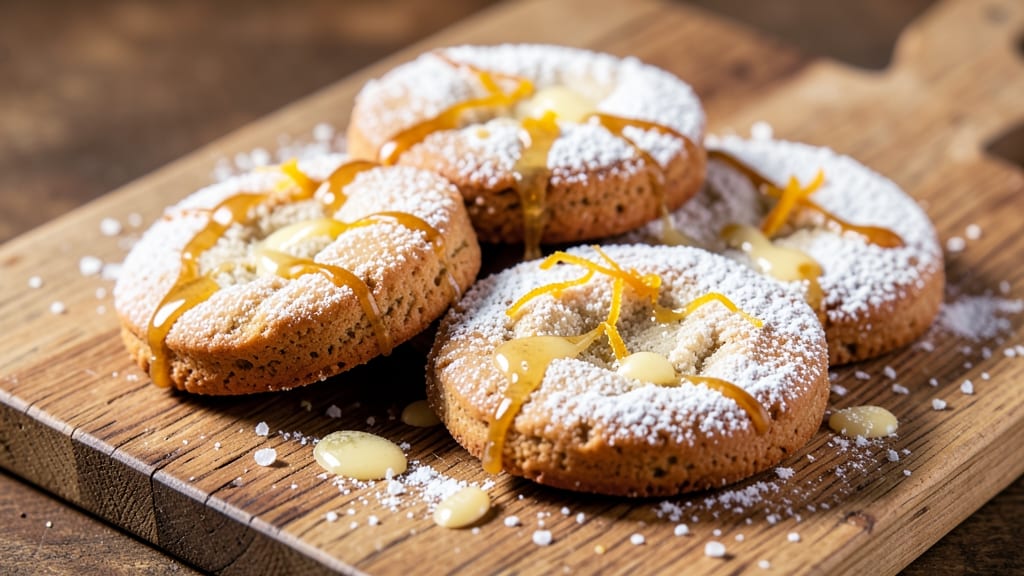
This Spanish cookie recipe delivers the delicate crunch and nutty richness of traditional polvorones—crispy-edged, almond-filled delights that crumble perfectly in your mouth. The secret lies in blending ground almonds with butter until it reaches that signature mantecado texture, then shaping them into elegant discs before baking to golden perfection.
I’ve perfected this recipe over years of holiday baking, ensuring every batch stays light yet sturdy enough to hold powdered sugar without falling apart.
The process is surprisingly straightforward: mix, shape, and bake. You’ll need just five key ingredients—almond flour, butter, powdered sugar, and a pinch of salt—to create cookies that taste like a taste of Spain.
The dough requires no chilling, cutting prep time to under 30 minutes, while the baking time of 12-15 minutes at 325°F ensures crisp edges and a tender center. This recipe also doubles as a foolproof gift idea—wrap them in cellophane tied with ribbon for a festive touch.
What makes these cookies truly special is their versatility. Dust with powdered sugar for a classic look, or sprinkle with cinnamon for warmth. They’re perfect as a holiday treat, a sophisticated dessert, or even a snack for afternoon tea.
The almond filling adds a satisfying crunch, while the buttery crust melts just enough to create that irresistible contrast. Once you try these, you’ll understand why they’re a staple in Spanish homes during the holidays.
For those who love texture variations, try adding a touch of vanilla extract or orange zest to the dough. The cookies keep well in an airtight container for up to two weeks, making them ideal for meal prep or gifting.
Let’s get baking—your kitchen will smell like a Spanish bakery in no time.
Ingredients for spanish cookie
Five simple ingredients transform into elegant Spanish cookies with perfect crunch and nutty richness.
| Ingredient | Amount | Notes |
|---|---|---|
| Almond Flour 🥜 | 3 cups | Finely ground, not almond meal |
| Unsalted Butter 🧈 | 1 cup | Cold, cubed, full-fat preferred |
| Powdered Sugar 🍚 | 1 ½ cups | Confectioners' sugar, sifted |
| Fine Sea Salt 🧂 | ½ tsp | Kosher or fine grain |
| Vanilla Extract 🌿 | 1 tsp | Pure vanilla for best flavor |
| Orange Zest 🍊 | 1 tbsp | Freshly grated, optional |
| Ground Cinnamon 🌶️ | 1 tsp | For cinnamon variation |
Almond flour is the heart of these cookies—Bob’s Red Mill or Anthony’s Goods are my go-tos for the finest grind. If you can’t find almond flour, blend whole almonds into a fine powder yourself (food processor, 1-2 minutes). The butter needs to be cold (almost like a dough) for that signature crisp texture. European-style butter like Plugrá or President works best—higher fat content means richer flavor. Store almond flour in an airtight container to keep it fresh (it goes rancid fast). The powdered sugar should be sifted to avoid lumps in your cookies.
No vanilla extract? Vanilla bean paste adds speckles and more flavor. Skip the orange zest if you’re not feeling citrusy—it’s optional but worth it for that bright Spanish touch. For the cinnamon variation, I like McCormick’s ground cinnamon (it’s consistent and affordable). If you’re making a big batch, double the vanilla and zest—they won’t overpower the almond flavor. Pro tip: use a microplane for the zest to get fine, fragrant strips without the bitter pith. And if you’re short on powdered sugar, confectioners’ sugar from Trader Joe’s is a budget-friendly dupe.
These cookies stay fresh for 2 weeks in an airtight container, but the crunch softens after day 3. To revive stale cookies, re-crisp in a 300°F oven for 5-10 minutes. For gifting, wrap in parchment-lined boxes tied with ribbon—they’ll look like they came from a Spanish bakery. Freeze dough balls for up to 3 months (bake straight from frozen, add 2 minutes). The aroma alone will make your kitchen smell like a holiday market.
Why You'll Love This Recipe
- No Mixer Needed: I swear by this recipe when my hands are full—just cream the butter, fold in the almond flour, and press. No beating, no waiting, no fuss. The dough comes together faster than I can finish a podcast episode.
- Buttery Vanilla Kiss: That first bite? Warm, crumbly perfection where the almond flour adds a nutty depth and the vanilla extract—just a teaspoon—makes every cookie smell like a bakery. Honestly, the powdered sugar dusting is the cherry on top.
- Holiday or Snack Attack: Pack them in jars for Christmas gifts (they freeze beautifully), or pull one out when you need a quick treat. Between us, these are my go-to for coffee dates or after-school pick-me-ups—no one ever says no.
- Budget-Friendly Luxury: Almond flour might sound fancy, but it stretches further than regular flour dough, and a stick of butter goes a long way. Plus, the leftovers? They last days in an airtight container, so I’m always covered without extra shopping.
Step-by-step instructions for Spanish almond cookies
Here's how to create these delicate, crunchy-edged cookies with a perfect almond filling—every bite delivers that signature Spanish texture.
Prepare the Almond Filling
In a food processor, combine the 3 cups almond flour, 1.5 cups powdered sugar, 1 tbsp orange zest, 1 tsp ground cinnamon, and 0.5 tsp fine sea salt. Pulse until the mixture forms a fine, sandy texture with no large flour clumps remaining. This ensures a smooth filling that won't be gritty when you bite into it.
With the processor running, add the 1 cup cold, cubed unsalted butter and process until the mixture comes together into a dough-like consistency. It should hold its shape when pressed but still be crumbly. If it feels too dry, add 1 tsp vanilla extract and pulse again. The filling should be firm enough to shape into small cylinders but still soft enough to press into the cookie dough.
Create the Cookie Dough
In a separate bowl, mix the 1 tsp vanilla extract with the remaining 1 cup cold, cubed unsalted butter until just combined. This creates a simple, flavorful base for the cookie dough. The butter should still be cold and slightly crumbly—this prevents the cookies from spreading too much in the oven.
Gradually add the 3 cups almond flour to the butter mixture, mixing with a fork or your hands until a rough dough forms. The dough should be stiff and slightly crumbly—this is key for achieving those signature crunchy edges. If it feels too dry, add 1 tsp vanilla extract or a splash of cold water, but only enough to bring it together without making it sticky.
Shape and Fill the Cookies
Divide the dough into 24 equal portions (about 1 tablespoon each) and roll each into a 1-inch-long log. Flatten one end of each log slightly with your palm—this creates a little "cup" that will hold the almond filling. Keep the shaped dough on a parchment-lined tray while you prepare the filling.
Take one of the almond filling portions and roll it into a 1-inch-long cylinder. Gently press it into the flattened end of a dough log, then seal the top by pinching the dough together. Place the filled cookie on a parchment-lined baking sheet, seam-side down. Repeat until all dough and filling are used, spacing the cookies about 1 inch apart on the tray.
Bake to Golden Perfection
Preheat your oven to 350°F and bake the cookies for 12-15 minutes, rotating the tray halfway through baking. You're looking for edges that are deep golden brown and slightly crispy, while the centers remain soft. Overbaking will make them dry, so watch closely—especially if your oven runs hot.
Let the cookies cool on the baking sheet for 5 minutes before transferring them to a wire rack. They'll continue to firm up as they cool, developing that perfect crunchy exterior and tender interior. For the best flavor, serve them at room temperature—this allows the almond filling to set slightly, making each bite more satisfying.
Pro Tips For Making Spanish Cookie
- CHILL THE DOUGH: Mix your almond flour, butter, and sugar until it’s just combined—no need to overwork it—and then let the whole batch sit at room temp for 20 minutes. I used to skip this, and the cookies spread too much in the oven, turning into sad, flat pancakes instead of those perfect, melt-in-your-mouth rounds.
- WEIGH THE ALMOND FLOUR: Scooping almond flour leads to inconsistent batches. Use a kitchen scale for precision—aim for 200 grams, packed lightly but not compressed. I learned this after my first batch turned out way denser than the second, and now I swear by it for the right texture every time.
- SALT THE BUTTER: Mix the fine sea salt directly into the softened butter before creaming it with the sugar. Skipping this step means your cookies taste bland no matter how much you add later—I know, I’ve done it. A pinch here guarantees that salty-sweet balance without overdoing it.
- BAKE IN BATCHES: Your oven’s hot spots will wreck these cookies if you crowd the tray. Use a parchment-lined sheet and space them 2 inches apart, then bake one tray at a time. I used to fit 24 on a sheet, and half came out undercooked while the edges burned—now I bake 16 and get perfect results.
Troubleshooting great spanish cookie
Dough Too Dry?
If your dough feels like sandpaper, it’s likely too dry from overmixing or almond flour absorbing too much moisture. Add 1 tsp vanilla extract or a splash of cold water (½ tsp at a time) and mix gently by hand.
Avoid overworking it—just press the dough together until it holds when squeezed. I’ve found that European-style butter (like Plugrá) helps retain moisture better than American brands. 💧
Filling Breaks Apart
The almond filling should be firm but pliable—if it crumbles when shaping, it’s either too dry or not processed enough. Pulse the filling in your food processor for another 10-15 seconds to bind it, or add ½ tsp vanilla extract to help it hold together.
Chill the filling for 10 minutes before using if it’s still too crumbly. I’ve also had success adding 1 tbsp almond milk to the filling mixture for extra cohesion.
Cookies Spread Too Much
Overmixing the dough or using warm butter causes spreading. Ensure your butter is cold and cubed (not softened) and mix just until combined. For extra insurance, chill the shaped dough logs in the fridge for 15 minutes before baking.
I’ve also seen success using parchment-lined baking sheets with a silicone mat underneath—this prevents sticking and helps maintain shape. 🧊
Edges Stay Soft
Underbaking or an oven that’s too cool can leave cookies soft-edged. Increase baking time by 2-3 minutes and check at 12 minutes—they should be deep golden brown with crisp edges. If your oven runs cool, preheat for 15 minutes longer.
For even crispier edges, bake on the top rack of your oven. I’ve also found that rotating the tray halfway through ensures even browning.
Cookies Taste Bland
Skip the vanilla extract? No wonder! Boost flavor by adding 1 tbsp orange zest or ½ tsp cinnamon to the filling. For extra richness, replace ½ cup almond flour with ground pistachios (they add a nutty depth).
I’ve also had great results toasting the almond flour in a dry pan for 2 minutes before mixing—this enhances its natural flavor. 🌿
Filling Leaks Out
If the filling oozes when baking, your dough isn’t sealed tightly enough. Press the dough logs more firmly around the filling, and avoid overfilling—stick to 1-inch-long cylinders. For extra security, place the filled cookies on their sides on the baking sheet so the seam stays closed.
I’ve also found that baking at 325°F instead of 350°F helps the filling set more slowly, reducing leakage. 🔥
Nutrition facts
Frequently asked questions
What makes these Spanish cookies different from regular almond cookies?
These Spanish cookies feature a signature crispy exterior and tender almond filling, unlike traditional almond cookies that often have a softer texture. The dough is shaped into logs with a filling pressed inside, creating a two-texture bite—crunchy shell with a buttery, nutty center. The recipe also uses almond flour instead of ground almonds for a finer, smoother texture.
Can I make these cookies without a food processor?
Yes! For the filling, mix the 3 cups almond flour, 1.5 cups powdered sugar, and other dry ingredients in a bowl, then rub in the 1 cup cold butter with your fingers until it resembles wet sand. For the dough, cut the cold butter into the almond flour using a pastry cutter or two knives until crumbly. The texture will be slightly less refined but still delicious.
How do I store these cookies to keep them crispy?
Store in an airtight container with parchment paper between layers to prevent sogginess. They stay fresh for 2 weeks at room temperature. For extra crunch, revive stale cookies by baking at 300°F for 5-10 minutes. Avoid refrigerating—moisture from the fridge makes them soft faster.
What’s the best way to decorate these cookies?
Classic options include dusting with powdered sugar or sprinkling with ground cinnamon. For festive touches, add edible gold leaf or a drizzle of melted chocolate. For a Spanish twist, use orange zest on top before baking. Keep decorations minimal—their natural beauty shines through!
Can I substitute almond flour with other nuts?
While almond flour is ideal, you can try hazelnut or pistachio flour for a different flavor. Just note the texture will change—hazelnut adds earthiness, while pistachio brings a slightly sweeter, green-tinged taste. For best results, toast the nuts first to enhance their natural oils.