Desserts
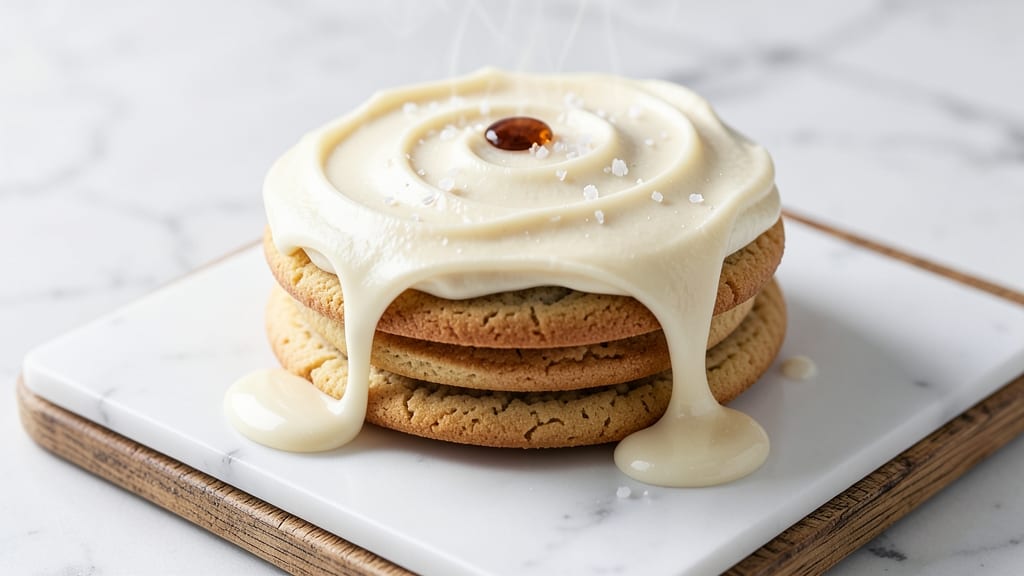
Betty Crocker’s sugar cookie frosting recipe delivers that perfectly smooth, vanilla-kissed finish every time—just like the iconic brand. This stable, spreadable frosting is designed to pipe beautifully, creating those signature swirls and borders that make cookies look (and taste) like they came from a bakery.
The secret lies in the butter-to-powdered sugar ratio and proper mixing technique, which ensures a frosting that’s neither too stiff nor too runny.
What sets this frosting apart is its foolproof consistency—no lumps, no graininess, and no last-minute adjustments. The recipe uses room-temperature butter and vanilla extract for that classic Betty Crocker flavor, while a touch of milk creates the ideal spreadable texture.
It’s simple to make with just five ingredients, yet it elevates even the most basic sugar cookie into something extraordinary. Whether you’re piping rosettes or flooding cookies for a smooth finish, this frosting delivers restaurant-quality results every time.
The beauty of this frosting is its versatility—it works for piping bags, spatulas, or even a simple butter knife. For added richness, you can fold in a small amount of cream cheese or swap in almond extract for a nutty twist.
The key is cooling the frosting slightly before decorating, which prevents the butter from melting too quickly in warm temperatures. With this recipe, your cookies will not only taste like a classic treat but also look like they belong on a holiday dessert table.
Perfect for decorating sugar cookies, gingerbread, or even cupcakes, this frosting is a game-changer for anyone who loves baking but wants professional-looking results. Once you try it, you’ll never go back to store-bought frosting. Let’s get started!
Ingredients for betty crocker sugar cookie frosting
Five essential ingredients transform into the iconic Betty Crocker sugar cookie frosting—smooth, stable, and perfect for piping.
| Ingredient | Amount | Notes |
|---|---|---|
| Unsalted Butter 🧈 | 1 cup | Room-temperature, European-style preferred |
| Powdered Sugar 🍚 | 3 cups | Sifted for smooth texture |
| Pure Vanilla Extract 🍯 | 1 ½ tbsp | High-quality, not imitation |
| Whole Milk 🥛 | 1 tbsp | Full-fat for ideal consistency |
| Diamond Crystal Kosher Salt 🧂 | ¼ tsp | Fine grain preferred |
The butter is non-negotiable for texture. European-style (like Plugrá) has higher fat content, yielding a richer frosting with better spreadability. Room temperature is critical—if it's too cold, the frosting will be grainy; if too soft, it'll melt too quickly. Store butter in its original wrapper until ready to use, then let it sit at room temperature for 1-2 hours. For powdered sugar, Domino brand is widely available and reliable, but sifting is mandatory to eliminate clumps. Vanilla extract quality varies wildly—McCormick Pure Vanilla delivers consistent results without bitterness.
No room-temperature butter? Microwave in 20-second bursts until just soft (not melted). Substituting milk? Heavy cream works best for richness, but whole milk is the classic choice. For a tangy twist, cream cheese (2 tbsp) can replace 2 tbsp butter. Want extra flavor? Almond extract (0.5 tsp) pairs beautifully with vanilla. If your frosting seems too stiff, add milk 1 tbsp at a time; too thin? Add 1 tbsp powdered sugar at a time. The key is patience—mix just until combined to avoid incorporating air, which can cause collapse.
This frosting keeps beautifully in the fridge for up to 5 days, covered tightly with plastic wrap pressed directly on the surface. For longer storage, freeze in an airtight container for up to 3 months. Let it sit at room temperature for 10-15 minutes before piping to reach ideal consistency. Portion into piping bags ahead of time for convenience. If using for decorating, chill the frosting for 30 minutes before piping—this prevents melting in warm temperatures and creates sharper edges for rosettes and borders.
Why You'll Love This Recipe
- No-Fuss Mixing: I swear by this recipe because it’s three ingredients (plus salt) with no sifting or overworking—just cream the butter, toss in the powdered sugar, and let the vanilla and milk do the magic. The texture comes together in minutes, not hours.
- Vanilla-Kissed Perfection: That pinch of salt and splash of milk make all the difference—it’s sweet but not cloying, with a velvety smoothness that’s dangerously easy to overdo. Honestly, my kids fight over the leftover bowl.
- Holiday Hero: This frosting is my go-to for sugar cookies, but it also slaps on donuts, cake layers, or even as a glaze for cinnamon rolls. (Yes, even on a Tuesday night.) It’s the kind of recipe that works for birthdays, potlucks, or just because.
- Budget-Friendly Luxury: You’re using pantry staples here—no fancy shortcuts, just good ingredients done right. A stick of butter and a bag of powdered sugar stretch far, and the leftovers keep for weeks in the fridge. That’s real value.
Step-by-step instructions for vanilla-kissed sugar cookie frosting
This classic sugar cookie frosting delivers a smooth, pipeable consistency every time—no lumps, no graininess.
Prepare Ingredients for Optimal Texture
Begin by ensuring the 1 cup unsalted butter is completely softened to room temperature. Press a finger into the butter—it should leave a slight indentation but hold its shape. This prevents lumps in the frosting while maintaining a light, airy texture. Sift the 3 cups powdered sugar through a fine-mesh sieve directly into a stand mixer bowl to eliminate any clumps that could create graininess in the final product.
Measure out the 1.5 tablespoons pure vanilla extract and 1 tablespoon whole milk into a small bowl. The milk adds subtle moisture and helps bind the ingredients, while the vanilla extract infuses that signature flavor. Sprinkle the 0.25 teaspoon diamond crystal kosher salt over the powdered sugar—this enhances the vanilla flavor and balances sweetness without overpowering it.
Cream Butter and Sugar for Lightness
Attach the paddle attachment to your stand mixer and beat the softened butter on medium speed for 2-3 minutes until completely smooth and free of any graininess. Gradually add the sifted powdered sugar, mixing on low speed to avoid creating a cloud of sugar dust. Once incorporated, increase the speed to medium and beat for 3-4 minutes until the mixture is pale, fluffy, and nearly doubles in volume.
This creaming process incorporates air into the frosting, which is essential for achieving that light, billowy texture when piped. If the mixture seems too thick, add the milk 1 teaspoon at a time while mixing, but avoid adding it all at once—this could cause the frosting to become too thin and lose its structure.
Incorporate Vanilla and Salt for Flavor Balance
With the mixer running on low speed, gradually add the vanilla extract and milk mixture to the butter-sugar blend. Scrape down the sides of the bowl with a spatula to ensure even incorporation. Increase the speed to medium and beat for an additional 1-2 minutes until the frosting is completely smooth and homogeneous.
Add the 0.25 teaspoon diamond crystal kosher salt and mix for 30 seconds to ensure it’s evenly distributed. Taste the frosting at this stage—it should be sweet but not cloying, with a clean vanilla flavor that’s bright and aromatic. If the frosting is too thick to pipe smoothly, add 1-2 teaspoons more milk and mix until it reaches a spreadable consistency.
Achieve Perfect Piping Consistency
Transfer the frosting to a piping bag fitted with a large star tip (Wilton 1M or similar) for decorative rosettes, or use a round tip for smooth swirls. Pipe the frosting directly onto sugar cookies or into a decorating bag for later use. The frosting should hold its shape when piped but still be soft enough to spread slightly under its own weight, creating those signature ruffled edges.
If the frosting begins to stiffen after sitting, simply re-whip it on low speed for 30-60 seconds to restore its smooth texture. For best results, use the frosting within 2-3 hours of preparation, or store it in an airtight container in the refrigerator for up to 5 days. Bring it to room temperature before re-whipping if it has thickened.
Finish and Decorate with Precision
For a professional finish, pipe the frosting in continuous motions, applying even pressure to create uniform swirls or rosettes. Work quickly to avoid over-handling, which can cause the frosting to soften and lose its shape. If you’re filling cookies, pipe a generous amount onto the base and spread it evenly with the back of a spoon or offset spatula before adding additional layers or decorations.
The frosting should be thick enough to hold its form but still yield slightly under gentle pressure, allowing for that classic "sugar cookie" texture. Garnish with sprinkles, edible glitter, or a dusting of powdered sugar while the frosting is still slightly tacky for the best adherence. Serve immediately for the freshest flavor and texture.
Pro Tips For Making Betty Crocker Sugar Cookie Frosting
- Soften Butter Properly: Take the butter straight from the fridge and cut it into small cubes—this way, it’ll soften evenly in 10-15 minutes at room temp. I learned this the hard way after trying to mix lumpy, uneven butter into powdered sugar and ending up with a grainy mess.
- Sift the Powdered Sugar: Don’t skip this—even if it looks fine. A quick sift through a fine-mesh sieve removes clumps and aerates the sugar, so your frosting comes out silky instead of gritty. Yes, it’s an extra step, but it makes a real difference.
- Measure Salt Precisely: Diamond Crystal kosher salt is not the same as table salt—use ½ teaspoon, not ¼. I once doubled it by accident and ended up with frosting that tasted like a salt lick. Double-check that tiny pinch.
- Add Milk Gradually: Start with 1 tablespoon, then mix before adding more. Too much milk too fast turns your frosting into a runny disaster. If it’s too thick, you can’t fix it—better to add slowly and adjust than panic later.
Troubleshooting this dish
Grainy Texture Fix
If your frosting looks grainy, it’s likely due to cold butter or unsifted powdered sugar. Start by ensuring your butter is fully softened—press a finger into it; it should leave a slight indentation. Sift the powdered sugar through a fine-mesh sieve before mixing to eliminate clumps.
If graininess persists, re-whip the frosting on low speed for 1-2 minutes while adding 1 teaspoon milk at a time until smooth. Overmixing can incorporate air, so stop as soon as it looks creamy. 🧈
Too Thin or Runny
A runny frosting usually means too much milk or warm butter. The fix? Gradually add 1 tablespoon powdered sugar at a time while mixing on low speed until it reaches a thick, spreadable consistency.
For a quick test, pipe a small amount onto a plate—it should hold its shape but still be pliable. If the frosting is still too thin, chill it in the refrigerator for 15-20 minutes before re-whipping to restore structure.
Avoid adding more sugar all at once; it can make the frosting too stiff.
Too Thick or Stiff
Stiff frosting often happens if the butter is too cold or you’ve overmixed. First, try warming the frosting slightly by placing the bowl over a pot of barely simmering water (double boiler) for 30 seconds, then re-whip on low speed.
Add 1 teaspoon milk at a time until it reaches a smooth, pipeable consistency. If it’s still too thick, let it sit at room temperature for 10-15 minutes to soften naturally.
For stubborn stiffness, a quick fix is to add ½ teaspoon corn syrup or lemon juice to help loosen the mixture.
Frosting Melts Too Fast
If your frosting melts or softens quickly, the butter might be too warm or the powdered sugar ratio is off. Chill the frosting in the refrigerator for 30 minutes before piping to firm it up.
For a more stable frosting, reduce the milk by 1 teaspoon and add 1 extra tablespoon powdered sugar to the original recipe. If you’re working in a warm kitchen, pipe the frosting onto cookies and immediately place them in the freezer for 5 minutes to set before adding decorations.
This trick keeps the frosting crisp for longer.
Separation or Oily Spots
Separation occurs when butter and sugar aren’t properly emulsified, often due to overmixing or cold ingredients. Scrape down the sides of the bowl and re-whip on low speed for 1 minute to reincorporate the butter.
If oil separates, gently fold in 1 teaspoon powdered sugar or a pinch of salt to help bind the mixture. For a more permanent fix, transfer the frosting to a clean bowl and re-cream it on low speed until smooth.
This ensures the butter and sugar re-emulsify properly for a uniform texture.
Weak Vanilla Flavor
A lackluster vanilla flavor usually means using imitation extract or not enough of it. Swap out your vanilla extract for McCormick Pure Vanilla or Nielsen-Massey, which are more potent. For an extra boost, add ½ teaspoon vanilla bean paste along with the extract.
If the frosting tastes flat, let it sit at room temperature for 10 minutes before tasting—sometimes the flavors need time to meld. For a deeper vanilla kick, infuse the milk with 1 vanilla bean pod while heating it gently (not boiling) for 5 minutes, then strain before using.
Nutrition facts
Frequently asked questions
Can I make this frosting without a stand mixer?
Use a hand mixer or even a sturdy whisk. Cream the butter and sugar by hand for 5-7 minutes until light and fluffy—this builds air just like a mixer does. Mix in the vanilla and milk by hand until fully combined, then chill for 15 minutes before piping to improve texture.
How do I store leftover frosting?
Keep it airtight in the fridge for up to 5 days—press plastic wrap directly on the surface to prevent drying. For longer storage, freeze in an airtight container for 3 months. Thaw overnight in the fridge before re-whipping to restore smoothness. Never refreeze once thawed.
Why did my frosting turn out too stiff?
Cold butter or overmixing are the usual culprits. Fix it by gently warming the frosting (place bowl over barely simmering water for 30 seconds) or adding 1 teaspoon milk at a time while mixing. For stubborn stiffness, chill for 10 minutes to firm up, then re-whip. Avoid adding extra sugar—it can make it grainy.
Can I use this frosting for cake layers?
This recipe is designed for decorating, not layering. For cake filling, increase powdered sugar to 4 cups and reduce milk to ½ tablespoon—this creates a thicker, more stable spread. Chill cake layers before frosting to prevent melting. For a filling consistency, pipe between layers and smooth with an offset spatula.
What's the best piping tip for rosettes?
A Wilton 1M tip (large star) works perfectly for classic rosettes. Fill a piping bag ⅔ full to avoid overflow, then pipe continuously in a circular motion. For sharper edges, chill the frosting for 30 minutes before piping. Work quickly in warm kitchens—pipe onto cookies and freeze for 5 minutes to set before adding sprinkles.