Main Courses
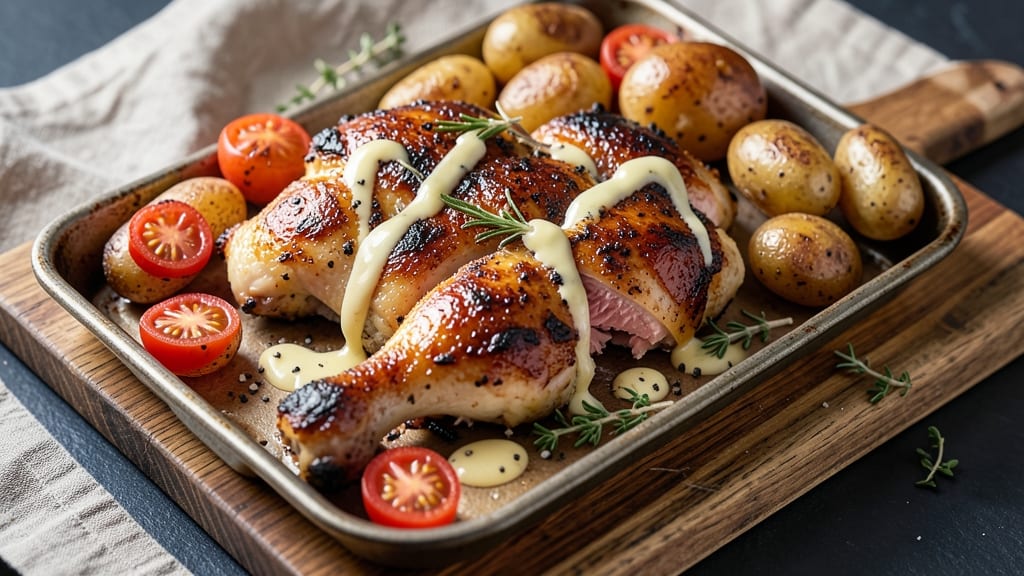
You can bake chicken on a cookie sheet for crispy, even results by elevating it on a wire rack to prevent moisture buildup, though it may take slightly longer than a baking sheet. Preheat your oven to 375°F (190°C), season generously, and bake uncovered for 25-35 minutes, adjusting for thickness.
Using a cookie sheet for baking chicken works because its thin metal construction spreads heat more evenly than a baking sheet, especially when paired with a wire rack. 🔥 The rack lifts the chicken off the surface, allowing hot air to circulate underneath and create that coveted crispy exterior while keeping the meat juicy inside.
I’ve found that bone-in pieces like thighs or drumsticks benefit most from this method—they hold up better to longer bake times and develop deeper flavor.
For best results, pat the chicken dry before seasoning and place it on the rack skin-side up. If you’re worried about drying out, consider a quick sear in a hot skillet before transferring to the oven.
This two-step approach locks in moisture while building a flavorful crust that’s hard to achieve on a flat surface alone.
💡 In This Article
- How Oven Temperature and Surface Affect Chicken Cooking
- Best Cookie Sheet Baking Methods for Juicy Chicken
How oven temperature and surface affect chicken cooking
The key difference between cookie sheets and baking sheets lies in their metal thickness and heat conduction properties. A cookie sheet's thin aluminum or steel construction heats up faster and distributes heat more evenly than a thicker baking sheet.
This rapid heat transfer creates a more consistent 375°F (190°C) environment around the chicken, crucial for even cooking. The thin metal also responds quickly to temperature fluctuations, preventing hot spots that can dry out chicken unevenly.
Here's what's actually happening with moisture: Chicken releases steam as it cooks, which typically pools on flat surfaces like baking sheets. This trapped moisture creates a steam bath that softens the skin instead of crisping it.
A wire rack elevates the chicken 1/2 to 1 inch above the sheet, allowing hot air to circulate underneath. This airflow carries away excess moisture while directing radiant heat directly at the skin, creating that perfect crispy texture we all crave. 🔥
The oven's preheat time matters more than you might think. A properly preheated oven maintains a stable 375°F (190°C) environment from the moment your chicken goes in. This consistency is vital for two reasons: First, it ensures the chicken's surface reaches 165°F (74°C) evenly without overcooking the center.
Second, it prevents temperature spikes that can cause uneven browning. I've noticed that skipping preheating can result in a 10-15°F (5-8°C) temperature drop when the chicken enters, leading to longer cook times and less crispy skin.
Temperature control also affects the skin's texture differently. For maximum crispiness, aim for the higher end of the 375°F (190°C) range—closer to 400°F (200°C) for the first 10 minutes if your oven allows.
This higher heat helps set the skin quickly before dropping to 375°F (190°C) for the remainder of cooking. The science here involves protein denaturation: rapid heating causes the collagen in the skin to contract quickly, creating those tight, crispy fibers we love.
Conversely, lower temperatures (350°F/175°C) result in softer, more rubbery skin.
Consider this comparison: On a flat baking sheet, a 6-ounce (170g) chicken breast might cook in 20-25 minutes, while the same piece on a cookie sheet with a wire rack could take 25-30 minutes. The extra time pays off with better texture and flavor development.
For bone-in pieces like thighs, the wire rack method actually reduces cook time by 5-10 minutes because the bones conduct heat more efficiently when exposed to circulating air.
What most people don't realize is how the oven rack position affects results. Placing chicken on the middle rack (about 3-4 inches from the heat source) gives the most even cooking. The top rack can dry out the skin too quickly, while the bottom rack may leave the underside soggy.
This middle position creates a convection effect where hot air rises, circulates, and then falls back down, cooking the chicken from all angles. ✨