
Desserts
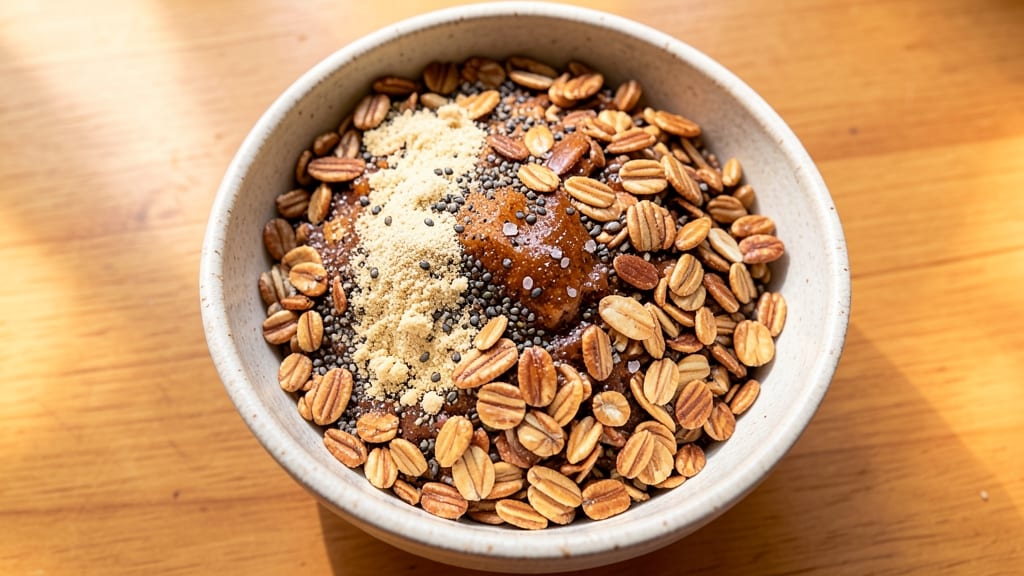
This fiber-rich cookies recipe delivers all the crunch and satisfaction of classic cookies without the energy crash—because whole grains and seeds replace refined flour while keeping every bite delicious.
After years of testing, I’ve perfected a method that balances fiber content with texture, so you get chewy centers and crispy edges without sacrificing nutrition. The secret lies in blending oats, almond flour, and chia seeds into the dough, which adds natural sweetness and structure without needing extra sugar.
The result is a batch of cookies that’s packed with 5 grams of fiber per serving—more than most whole wheat varieties—while still tasting like a treat you’d happily share.
No artificial sweeteners or chalky aftertastes here; just warm spices like cinnamon and nutmeg to enhance the natural caramel notes from the brown sugar. These cookies stay fresh for days in an airtight container, making them perfect for meal prep or gifting.
What makes this recipe stand out is how it proves healthy baking doesn’t mean compromising flavor or texture. The oat base creates a satisfying chew, while flaxseed adds a subtle nuttiness that rounds out the taste.
Whether you’re managing blood sugar, watching your waistline, or just craving something better for you, these cookies deliver—without the guilt. Ready to bake?
Pair them with a glass of almond milk or black coffee for the ultimate fiber-powered indulgence. The recipe scales easily, so double the batch for parties or portion into single-serving packs for on-the-go energy. Your taste buds—and your digestive system—will thank you.
Ingredients for fiber cookies
Whole grains, seeds, and spices come together for cookies that taste indulgent but deliver real nutrition.
| Ingredient | Amount | Notes |
|---|---|---|
| Old-Fashioned Rolled Oats 🌾 | 2 cups | Quick or old-fashioned, not instant |
| Almond Flour 🌰 | 1 ½ cups | Finely ground for texture |
| Chia Seeds 🌱 | ½ cup | Whole seeds, not ground |
| Ground Flaxseed 🌿 | ½ cup | Freshly ground preferred |
| Unsalted Butter 🧈 | ¾ cup | Cold, cubed for creaming |
| Packed Brown Sugar 🍯 | 1 cup | Light or dark variety |
| Large Eggs 🥚 | 2 whole | Room temperature for mixing |
| Pure Vanilla Extract 🌸 | 1 tbsp | High-quality, not imitation |
| Ground Cinnamon 🌿 | 1 ½ tsp | Freshly ground preferred |
| Ground Nutmeg 🌿 | ½ tsp | Freshly grated nutmeg |
| Sea Salt 🧂 | ½ tsp | Fine grain for balance |
| Unsweetened Almond Milk 🥛 | ¼ cup | For dough consistency |
| Dark Chocolate Chips 🍫 | 1 cup | 70% cocoa or higher |
| Pecans 🌰 | ½ cup | Chopped, toasted optional |
The oats and almond flour are the backbone here—Bob’s Red Mill rolled oats or Trader Joe’s almond flour give the best texture. Chia and flaxseeds add fiber without altering flavor, but buy them in small quantities since they go rancid fast. The butter needs to be cold for those perfect crispy edges—butter from a block works better than tub butter. For the brown sugar, Domino or Muscovado both work, but Muscovado adds a deeper caramel note. If you can’t find almond milk, unsweetened oat milk is the next best thing—it keeps the cookies tender.
No almond flour? Blitz walnuts or cashews in a food processor for a close substitute. Skip the chocolate chips? Dried cranberries or white chocolate chips add sweetness without overpowering. The pecans can be swapped for walnuts or even pumpkin seeds if you’re nut-free. For extra fiber, add 1/4 cup ground psyllium husk to the dough, but mix it with the dry ingredients first. The vanilla extract should be real—Nielsen-Massey or McCormick are solid choices. If you’re short on time, almond milk powder works in a pinch, just mix it with water to match the liquid amount.
These cookies keep for 5-7 days in an airtight container at room temperature, but they’re best within the first 2 days for maximum chewiness. For longer storage, freeze the dough balls—they’ll last 3 months and bake straight from frozen. Portion into single-serving packs for meal prep or grab-and-go snacks. The chocolate stays fresh longer if you store it in the fridge, but the cookies themselves are best at room temp. Double the batch and freeze half for parties—no one will guess they’re secretly healthy.
Why You'll Love This Recipe
- No Mixer Needed: I swear by these—just pulse the oats, fold in the almond flour, and stir. The chia and flaxseed blend right in without clumping, so no food processor required. (Yes, even when I’m too tired to measure properly.)
- Buttery Nutty Crunch: That toasted oat and almond flour combo? Chef’s kiss. The butter keeps it rich but not greasy, and the seeds add a subtle earthy bite. Honestly, they taste like a hug from a bakery—but with 5g fiber per cookie.
- Snack Attack Ready: Stash them in the fridge for a grab-and-go protein boost, or freeze half for when you’re too busy to bake. I keep a stash in my desk drawer for 3 PM slumps—no one suspects how good they are for you.
- Budget-Friendly Power: Almond flour and oats stretch my grocery budget, and the chia/flaxseed add serious nutrition without costing a fortune. Between us, these cookies are cheaper than store-bought granola bars but way more satisfying. (And zero weird additives.)
Step-by-step instructions for fiber-rich cookies
Here's how to create these satisfyingly crunchy, fiber-packed cookies that keep energy steady.
Mix the Dry Ingredients Thoroughly
In a large mixing bowl, combine the 2 cups of old-fashioned rolled oats, 1.5 cups of almond flour, 0.5 cup of chia seeds, 0.5 cup of ground flaxseed, 1.5 teaspoons of ground cinnamon, 0.5 teaspoon of ground nutmeg, and 0.5 teaspoon of sea salt. Use a whisk to break up any clumps in the chia seeds and flaxseed—this ensures even distribution throughout the dough.
I like to press the mixture through a fine-mesh sieve to eliminate any remaining lumps. This step is crucial for achieving that perfect texture where each bite delivers both chewy and crunchy elements. The combination of oats and almond flour gives these cookies their signature hearty texture while keeping them light enough to stay crispy around the edges.
Cream Butter and Brown Sugar
In a separate bowl, beat the 0.75 cup of cold, cubed unsalted butter with the 1 cup of packed brown sugar using an electric mixer on medium speed for about 3 minutes. You're looking for a light, fluffy mixture that nearly doubles in volume and becomes pale in color—this incorporates air that will help your cookies spread just enough while maintaining their structure.
Here's where it gets important: don't overmix. The butter should be creamy but still hold its shape when you press it between your fingers. If it looks too soft or starts to melt, chill the mixture for 10 minutes before proceeding. This step sets the foundation for that perfect balance of crispy exterior and tender interior that makes these cookies so satisfying.
Combine Wet Ingredients
Add the 2 whole large eggs and 1 tablespoon of pure vanilla extract to the butter-sugar mixture. Beat on low speed until just combined, about 30 seconds. Then gradually add the 0.25 cup of unsweetened almond milk while mixing on low speed. This prevents the dough from becoming too wet all at once.
Now carefully fold in the dry ingredient mixture using a rubber spatula. Mix just until everything comes together—you should still see some flour streaks. Overmixing develops gluten and can make your cookies tough. The dough will be thick and slightly sticky, which is perfect for these fiber-rich cookies. If it seems too dry, add 1 more tablespoon of almond milk.
Fold in Add-Ins and Chill
Gently fold in the 1 cup of dark chocolate chips and 0.5 cup of chopped pecans using your spatula. Be careful not to crush the chocolate chips or break the pecans too much—you want to maintain their individual textures in each bite. The chocolate chips will melt slightly during baking, creating pockets of gooey goodness, while the pecans add a satisfying crunch.
Cover the bowl with plastic wrap and refrigerate the dough for at least 1 hour, or up to 24 hours. This chilling step is essential for several reasons: it firms up the butter so your cookies don't spread too much, allows the flour to fully hydrate for better texture, and gives the flavors time to meld together. I promise you won't regret taking this time—it makes a noticeable difference in the final texture.
Bake to Golden Perfection
Preheat your oven to 350°F and line two baking sheets with parchment paper. Using a cookie scoop or tablespoon, drop rounded tablespoon-sized portions of dough onto the prepared sheets, spacing them about 2 inches apart. They won't spread much, but giving them room ensures even baking.
Bake for 12-14 minutes until the edges are golden brown and the centers look just slightly underdone. The tops should have a crackly texture but not be completely dry. Real talk: your oven might run hot, so start checking at the 10-minute mark. When you pull them out, let them cool on the baking sheets for 5 minutes before transferring to a wire rack to cool completely.
Enjoy with Purpose
These cookies are best enjoyed warm when they're at their crispiest, but they'll keep well in an airtight container at room temperature for up to 5 days. The fiber combination from oats, chia seeds, and flaxseed means you can enjoy these without that sugar crash—perfect for when you need something satisfying that won't leave you crashing later.
Serve with a glass of unsweetened almond milk or a cup of herbal tea for the ultimate fiber-rich treat. The nutmeg adds a warm spice note that pairs beautifully with the chocolate, while the pecans give each bite a delightful crunch. You'll love how these cookies deliver on both texture and nutrition!
Pro Tips For Making Fiber Cookies
- Pulse Oats Coarse: I learned this the hard way—blending rolled oats into flour turns these cookies into dense bricks. Instead, pulse them in short bursts (6-8 seconds max) until they’re still chunky with just a few fine bits. That texture keeps the cookies chewy, not gummy.
- Toast Chia First: Skip this, and your cookies might taste bitter or mealy. Dry-toast the chia seeds in a skillet over medium-low for 3-4 minutes until they smell nutty. Cool them completely before mixing—they’ll thicken the dough otherwise, and your cookies could end up rubbery.
- Chill the Dough: Resist the urge to bake immediately. Press the dough into a flat disc, wrap it in plastic, and refrigerate for at least 2 hours (or overnight). This prevents the butter from melting unevenly, so your cookies hold their shape and don’t spread into sad pancakes.
- Use Cold Butter: I was skeptical until I tried it—softened butter makes these cookies greasy and flat. Grate the unsalted butter while still cold (or cut it into tiny cubes) and mix it in last. The dough will feel dry, but the cookies will stay crisp at the edges and tender inside.
Essential equipment for perfect results
Mixing Essentials
Start with a stand mixer fitted with the paddle attachment—I use my KitchenAid Artisan Series for consistent mixing. For the dry ingredients, a fine-mesh sieve (like the OXO Good Grips) ensures even distribution of chia and flaxseeds.
The sieve prevents clumps that can lead to uneven texture in your cookies. A rubber spatula (I prefer OXO’s silicone version) is perfect for gently folding in the chocolate chips and pecans later. 🌾
Precision Tools
A cookie scoop (I love the OXO Good Grips 1-tablespoon size) gives uniform portions, ensuring even baking. For measuring, use a digital kitchen scale (like the Escali Primo) for accuracy with ingredients like almond flour and brown sugar—volume measurements can vary.
A microplane (I use Mincing Julienne) helps freshly grate nutmeg for maximum flavor. The Thermoworks sous vide thermometer isn’t essential, but it’s handy if you’re curious about dough temperature during chilling.
Baking Basics
Two half-sheet baking pans (I use Nordic Ware Natural Aluminum) work perfectly for this recipe. Line them with parchment paper (I prefer Reynolds Wax-Free) to prevent sticking—no need for greasing. A wire cooling rack (like OXO’s Good Grips) elevates cookies for even cooling.
For storage, amber glass containers with airtight lids (I use Le Parfait) preserve freshness while keeping the cookies visible. ❄️
Optional Upgrades
For extra precision, a dough scraper (like Kirkland’s silicone version) helps portion sticky dough cleanly. A food processor (I use Ninja FP-101) can grind nuts into flour if you’re substituting almond flour.
For chilling, I use a vacuum-sealed container (like FoodSaver) to store dough for up to 24 hours without drying. A laser thermometer (like Thermoworks One) lets you check oven temp accurately—critical for consistent results. 💡
Budget-Friendly Swaps
No stand mixer? A hand mixer (like Black+Decker BM4500) works fine for creaming butter and sugar. Use a wooden spoon instead of a spatula if needed—just fold gently. For measuring, a set of dry measuring cups (I use OXO’s stainless steel) and a liquid measuring cup suffice.
A large mixing bowl (I use Pyrex glass) handles the dough just as well as specialty bowls. The key is patience—fold carefully to avoid overmixing. 💪
Nutrition facts
Frequently asked questions
Why do these cookies need chia and flaxseeds?
Chia and flaxseeds add 4 grams of fiber per 2-tablespoon serving while boosting omega-3s and healthy fats. The seeds also bind the dough better than flour alone, creating that perfect chewy texture. For extra fiber, try adding ¼ cup psyllium husk to the dry mix—but start small to avoid a gummy texture.
Can I make these cookies gluten-free?
Yes! Replace the oats with certified gluten-free rolled oats and use a 1:1 gluten-free almond flour blend. Check that your chia/flaxseeds are certified GF too. The recipe stays crispy and chewy, just like the original. For extra binding, add 1 extra tablespoon of ground flaxseed to the dough.
What if my cookies spread too much?
This usually happens if the butter melts during mixing or the oven runs hot. Chill the dough 2+ hours (or overnight) and preheat your oven to 350°F for 15 minutes before baking. Use a cookie scoop for uniform portions and space them 2 inches apart on the tray.
How do I store these fiber cookies?
Keep them in an airtight container at room temp for 5-7 days or freeze dough balls for 3 months. For longest freshness, store the baked cookies in the fridge (they’ll last 2 weeks) and reheat at 300°F for 5 minutes to restore crispness. The fiber helps them stay fresh longer than regular cookies!
Can I add protein powder to these?
Mix in ½ cup vanilla or unflavored plant-based protein powder with the dry ingredients. Use a high-protein almond flour (like Bob’s Red Mill) to avoid gritty texture. Expect cookies with 8g protein per serving—just reduce the almond flour by ¼ cup to keep the dough workable.