
Desserts
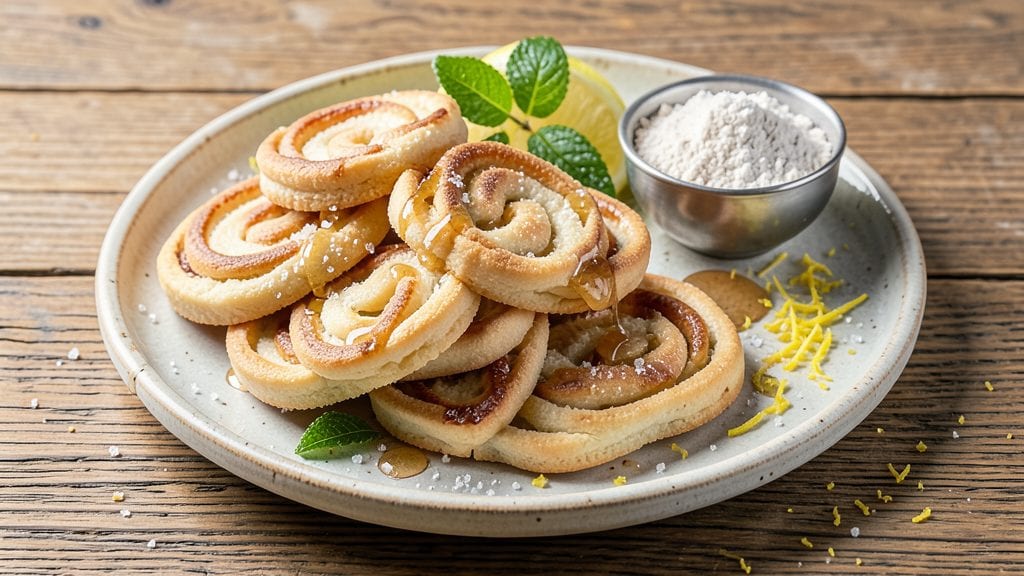
Creating delicate almond tuiles with crispy edges is an art I perfected after years of experimenting with French cookie techniques—each batch taught me something new about patience and precision.
These buttery, almond-infused cookies transform from tender discs into delicate, wavy edges when baked just right, a process that feels like baking magic. The secret lies in the perfect balance of flour, almond flour, and butter, combined with a touch of vanilla and lemon zest for brightness.
What makes these tuiles special is their foolproof method that delivers restaurant-quality results at home. With just 10 ingredients and 15 minutes of prep, you'll have cookies that look elegant enough for a Parisian café but simple enough for a weeknight treat.
The key is chilling the dough before baking, which ensures those signature crispy edges while keeping the centers tender and flavorful.
By the time you pull them from the oven, you'll have golden, wavy cookies with a delicate crunch that melts in your mouth. The almond flavor shines through while the buttery base adds richness, creating a cookie that's both sophisticated and comforting.
These tuiles are perfect for gifting, serving with tea, or enjoying as a sweet ending to any meal.
For variations, try adding a sprinkle of flaky sea salt before baking or mixing in chocolate chips for a twist on tradition. Let's get baking!
Ingredients for french cookies
Ten simple ingredients transform into delicate, golden tuiles with crispy edges—like a Parisian café in your kitchen.
| Ingredient | Amount | Notes |
|---|---|---|
| Unsalted Butter 🧈 | ½ cup | Cold, cubed for texture |
| Superfine Sugar 🍚 | ½ cup | Or granulated sugar, pulsed |
| Almond Flour 🥜 | 1 cup | Finely ground, no lumps |
| All-Purpose Flour 🌾 | ¼ cup | Sifted for light texture |
| Pure Vanilla Extract 🍯 | 1 tsp | High-quality, no alcohol |
| Lemon Zest 🍋 | 1 tsp | Freshly grated, vibrant |
| Large Eggs 🥚 | 1 whole | Room temperature, beaten |
| Pinch of Salt 🧂 | ⅛ tsp | Fine sea salt preferred |
| Powdered Sugar 🍚 | ¼ cup | For dusting, optional |
| Flaky Sea Salt 🧂 | 1 tsp | For garnish, optional |
The butter is non-negotiable here—European-style unsalted butter (like Plugrá or Miyoko's) gives the best flavor, but any good-quality unsalted works. Keep it cold when mixing to prevent over-handling. For almond flour, Bob's Red Mill is my go-to—it's finely ground and consistent. If you can't find superfine sugar, pulse regular granulated in a food processor until it's ultra-fine. The lemon zest should be bright yellow, not bitter—organic lemons from the store work perfectly. Pro tip: Zest only the yellow part, no white pith.
No vanilla extract? Vanilla bean paste works just as well—just use the same amount. Short on almond flour? Substitute half with finely ground blanched almonds (pulse in a food processor). Want extra richness? Add 1 tbsp melted white chocolate to the dough. The powdered sugar is optional but adds that café-style finish. If you skip it, just dust with a bit more almond flour for a nutty touch. For the sea salt, Maldon or any flaky variety is ideal—it dissolves beautifully on the warm cookies.
This dough needs at least 30 minutes in the fridge to firm up—don't rush it. Once baked, tuiles keep in an airtight container for 3 days at room temperature, but they're best enjoyed fresh. For gifting, place them in a metal tin with parchment between layers. If you make extra, freeze unbaked discs for up to 2 months—just bake straight from frozen, adding 2-3 minutes to the time.
Why You'll Love This Recipe
- No Cream of Tartar Drama: I swear by this recipe because it skips the fuss of measuring acids—just butter, sugar, and flour. The almond flour gives a tender crunch without the finicky sifting or extra steps, and honestly? The vanilla and sugar caramelize into something ridiculously good without needing a stand mixer.
- Buttery Vanilla Hug: That first bite of crisp edges and melt-in-your-mouth centers? It’s all thanks to the cold butter and superfine sugar—no graininess, just pure satisfaction. The vanilla isn’t just an afterthought; it’s the star, deep and warm, like a whisper of a Parisian café.
- Double-Duty Treats: These cookies are my go-to for picnics, gift baskets, or even a last-minute dessert. They hold up for days (yes, even on a Tuesday night) and freeze like a dream—perfect for when you bake once and eat for weeks.
- Budget-Friendly Luxury: Almond flour can feel pricey, but here’s the secret: a little goes a long way, and the all-purpose flour keeps costs down. Plus, one batch stretches into dozens of cookies, so you’re not scrambling for more. My wallet and taste buds thank me.
Step-by-step instructions for delicate almond tuiles
Here's how to create those signature French cookies with crispy edges and tender centers.
Prepare the Dough for Perfect Texture
In a stand mixer fitted with the paddle attachment, combine the 0.5 cup unsalted butter and 0.5 cup superfine sugar on medium speed until light and fluffy, about 3-4 minutes. This step is crucial—it incorporates air that will create those delicate tuile layers. The butter should look pale and nearly doubled in volume.
I like to press down on the butter mixture with a spatula occasionally to help it aerate faster. Once it reaches a ribbon stage (when you lift the paddle, the mixture leaves a ribbon that slowly dissolves), add the 1 tsp pure vanilla extract and 1 tsp lemon zest, mixing for another 30 seconds until fully incorporated. The lemon zest adds a bright, subtle citrus note that balances the richness of the almond flour.
Add Dry Ingredients for Light Structure
In a separate bowl, whisk together the 1 cup almond flour, 0.25 cup all-purpose flour, and 0.125 tsp pinch of salt. The almond flour should be finely ground to prevent any graininess in the final cookies. Sift the all-purpose flour if you notice any lumps—this ensures a light, tender texture.
With the mixer running on low speed, gradually add the dry ingredients to the butter mixture. Mix just until combined—about 30 seconds—being careful not to overmix. You want to maintain that airiness we created earlier. Add the 1 whole large egg and mix for another 30 seconds until the dough comes together. The dough should be smooth and slightly sticky but not wet. If it feels too dry, add a teaspoon of cold water.
Shape and Bake for Crispy Edges
Preheat your oven to 350°F and line a baking sheet with parchment paper. Using a small cookie scoop or tablespoon, drop the dough onto the prepared sheet, spacing the mounds about 2 inches apart. They won't spread much, so don't worry about them touching.
Here's the key to those crispy edges: Use the back of a spoon or your fingers to gently flatten each mound into a thin, oval shape—about ¼-inch thick. The thinner the cookie, the crispier the edges will become. Bake for 12-15 minutes until the edges are golden brown and the centers still look slightly underbaked. They'll continue cooking on the hot pan after you remove them.
Create the Signature Tuile Shape
As soon as you remove the cookies from the oven, use a spatula to quickly transfer them to a wire rack. While still warm, gently press down on each cookie with your fingers to create the classic tuile shape—curved edges that lift slightly at the ends. This should take about 30 seconds per cookie while they're still pliable.
Let the cookies cool completely on the rack before serving. The contrast between the crispy edges and tender centers is what makes these cookies so special. For an extra touch, dust with 0.25 cup powdered sugar or sprinkle with 1 tsp flaky sea salt while they're still warm. Serve with a cup of tea or coffee for the perfect French treat.
Pro Tips For Making French Cookies
- CHILL THE DOUGH: I learned this the hard way—rolling out warm almond-flour dough makes it stick to the rolling pin like glue. Wrap it in plastic and refrigerate for at least 30 minutes (yes, even if you're impatient like me). The cold makes it easier to handle and prevents those sad, uneven edges.
- WEIGH THE FLOUR: Scooping almond flour by the cup leads to inconsistent batches—sometimes crumbly, sometimes dense. Use a kitchen scale for precision, especially with the all-purpose flour. A gram difference here makes a real difference in texture, and you’ll notice it the second you bite in.
- DON’T OVERMIX: The moment you add the vanilla and butter, stop folding when the dough just comes together. Overworking it develops gluten, and these cookies are supposed to be tender, not chewy. Think "clumpy but cohesive," not "homogeneous."
- TOAST THE ALMONDS (IF USING): Skip this if you’re using almond flour, but if you’re adding whole almonds for texture, toast them first. Spread them on a baking sheet at 350°F for 8–10 minutes until fragrant. Untosted almonds stay bland, and the cookies won’t have that nutty depth you’re craving. (Pro move: pulse them lightly in a food processor after toasting for even distribution.)
Regional styles of this dish
Parisian Café Tuiles
These delicate almond cookies are the stars of Parisian patisseries, often served with tea or coffee. The secret lies in their thin, crispy edges that lift into elegant waves when shaped hot from the oven.
I remember my first visit to a Parisian bakery where they served these with earl grey tea—the buttery almond flavor paired perfectly. For an authentic touch, use European-style butter like Plugrá and bake at 350°F for 12-15 minutes until just golden.
The key is shaping them immediately after baking while still warm and pliable. 🍵
Lyon-Style Madeleines
Lyon's madeleines are a classic French cookie with a distinctive shell shape and tender crumb. Unlike tuiles, these use a madeleine pan to create their signature bumps. The dough includes 1 tablespoon of lemon juice for brightness and 1 tablespoon of rum or Grand Marnier for depth.
Bake at 375°F for 8-10 minutes until the edges are set but the centers remain soft. I love dusting them with powdered sugar right after baking for that café-style finish. These are perfect for afternoon tea or as a sweet accompaniment to a cheese plate. 🧈
Provençal Orange Blossom
In Provence, orange blossom water transforms simple cookies into something extraordinary. Replace the vanilla and lemon zest with 1 teaspoon of orange blossom water (available at specialty markets) and add 1 teaspoon of finely grated orange zest. The dough should be slightly more moist to accommodate the liquid.
Bake at 325°F for 14-16 minutes to prevent over-browning. These cookies have a delicate floral aroma that pairs beautifully with chamomile tea. I first discovered this variation at a market in Aix-en-Provence, and it's become a favorite for spring gatherings. 🌸
Normandy Butter Cookies
Normandy's rich dairy tradition shines in these buttery cookies, often called sablés. The recipe swaps almond flour for 2 cups of all-purpose flour and adds ½ cup of powdered sugar to the dough. For extra richness, replace ¼ cup of the butter with Normandy cream butter if available.
Bake at 375°F for 10-12 minutes until the edges are golden. These cookies are perfect for pairing with Calvados apple brandy or serving with a cup of strong black coffee. The texture is slightly denser than tuiles but equally delicious. 🥛
Alsace Spiced Cookies
Alsace's German-French heritage brings warm spices to these cookies. Add ½ teaspoon of cinnamon, ¼ teaspoon of cardamom, and ¼ teaspoon of cloves to the dry ingredients. Replace the lemon zest with 1 teaspoon of grated apple peel for a subtle tartness.
Bake at 350°F for 13-15 minutes, and finish with a sprinkle of coarse sugar while warm. These cookies pair beautifully with mulled wine during the holidays or with a cup of spiced chai tea. The spices add a cozy warmth that's perfect for cooler months. 🌿
Nutrition facts
Frequently asked questions
Why do French tuiles need to be shaped while still warm?
The warm shaping creates those signature crispy edges that lift into elegant waves. When you press the cookies while they're still pliable (about 30 seconds out of the oven), the residual heat helps set the shape while keeping the centers tender. This is what gives tuiles their delicate, restaurant-quality appearance.
Can I substitute almond flour with regular flour?
You can, but the texture will change significantly. Almond flour adds richness and a delicate crumb that regular flour can't replicate. For a closer substitute, use 1 cup finely ground blanched almonds (pulse in a food processor) mixed with ½ cup all-purpose flour—this maintains some of the almond flavor while improving structure.
How do I prevent tuiles from spreading too much in the oven?
Keep the dough chilled for at least 30 minutes before baking, and flatten the discs to exactly ¼-inch thickness. Using a chilled baking sheet also helps. If your kitchen runs hot, reduce the oven temperature to 340°F and watch closely after 10 minutes to avoid over-browning.
What's the best way to store these cookies?
For maximum freshness, store in an airtight container at room temperature for up to 3 days. If you need to keep them longer, freeze unbaked dough discs for 2 months—just bake straight from frozen, adding 2-3 extra minutes. For gifting, place parchment between layers in a metal tin.
Can I make these gluten-free?
Yes! Replace the 0.25 cup all-purpose flour with 0.25 cup gluten-free 1:1 baking flour (like Bob's Red Mill). For best results, add ½ teaspoon xanthan gum to help bind the dough. The texture will be slightly denser but still delicious—just check for doneness at 10 minutes since gluten-free batters can bake faster.