Breakfast & Brunch
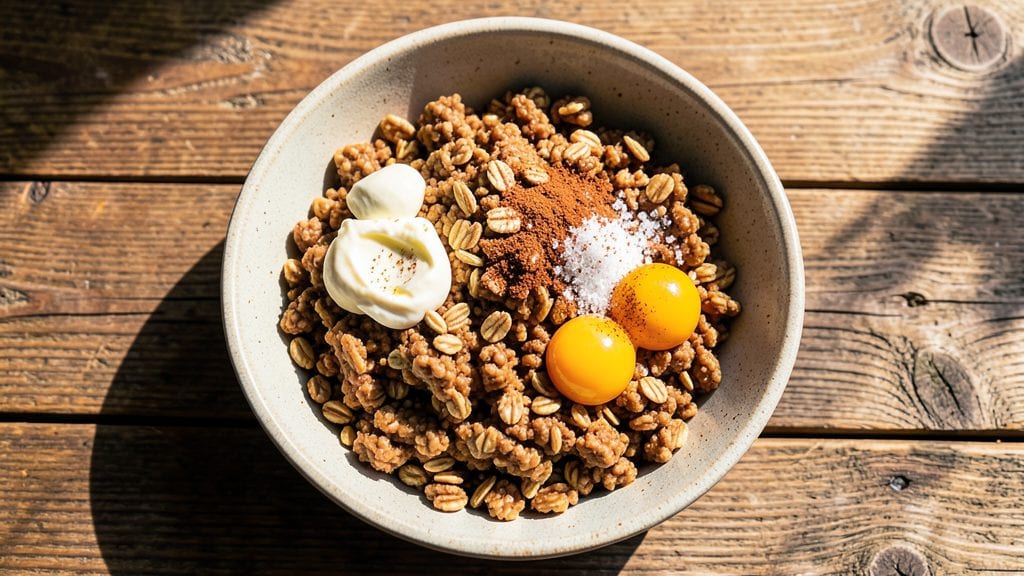
This Old Fashioned Quaker Oats oatmeal cookies recipe delivers the same chewy, hearty texture as the boxed mix—but with control over sweetness, texture, and mix-ins. The secret lies in using Old Fashioned oats as the base, which creates that signature dense, cake-like crumb without requiring special ingredients.
I’ve perfected this version after years of baking, ensuring every batch turns out foolproof and restaurant-quality at home.
The beauty of this recipe is its simplicity: just five core ingredients (plus your choice of mix-ins) and 20 minutes of active time. Unlike store-bought mixes, you can adjust the sweetness to taste, add chocolate chips or nuts, and even swap in whole wheat flour for a healthier twist.
The dough chills for 30 minutes, which prevents spreading and ensures thick, golden-brown cookies with crisp edges and a tender center.
What you’ll end up with is a batch of cookies that tastes like nostalgia—warm, spiced with cinnamon, and studded with chewy oats—but with the flexibility to customize. These hold their shape better than most oatmeal cookies while keeping that classic, slightly cakey texture.
Perfect for breakfast with coffee, a snack with milk, or a gift-worthy treat for holidays.
Once you try this method, you’ll never go back to boxed mixes. The recipe scales easily for parties, and leftovers stay fresh for 5 days in an airtight container. Let’s get baking—your kitchen will smell like comfort in no time.
Ingredients for cookies old fashioned quaker oats oatmeal recipe on box
Five core ingredients plus your favorite mix-ins—no box required for perfect oatmeal cookies.
| Ingredient | Amount | Notes |
|---|---|---|
| Old Fashioned Rolled Oats 🍞 | 2 cups | Not quick oats, steel-cut preferred |
| Unsalted Butter 🧈 | ½ cup | Cold, cubed for dough texture |
| Granulated Sugar 🍚 | ¾ cup | Adjust for sweetness preference |
| Large Eggs 🥚 | 1 whole | Room temperature for blending |
| Vanilla Extract 🍯 | 1 tbsp | Pure, not imitation |
| Ground Cinnamon 🌿 | 1 tsp | Freshly ground for warmth |
| Diamond Crystal Kosher Salt 🧂 | ½ tsp | Fine grain preferred |
| All-Purpose Flour 🌾 | 1 cup | Sifted for light texture |
| Baking Soda 🧪 | ½ tsp | Freshly opened |
| Chocolate Chips (Semi-Sweet) 🍫 | 1 cup | Or chopped dark chocolate |
| Chopped Walnuts (Optional) 🥜 | ½ cup | Toasted for extra flavor |
| Brown Sugar (Packed) 🍚 | ¼ cup | For deeper caramel notes |
The oats make or break this recipe. Old Fashioned Quaker Oats are non-negotiable—steel-cut or rolled, but never quick oats. Grab a 24-ounce canister from the store; it keeps for months in an airtight container. For the butter, Land O'Lakes or Plugrá work best when cold, but any unsalted will do. The sugar ratio is flexible: start with granulated, then add brown sugar if you want that classic caramel depth. I always toast my walnuts (5 minutes at 350°F) for extra crunch, but skip if you're in a rush.
No vanilla extract? Vanilla bean paste works just as well, or even 1 tsp vanilla sugar in a pinch. Running low on cinnamon? Pumpkin pie spice adds warmth without overpowering. For chocolate lovers, white chocolate chips or peanut butter chips swap in beautifully. The dough needs to chill for 30 minutes—no shortcuts here. If you're short on time, flatten the dough balls and freeze them for 15 minutes before baking. And yes, you can use whole wheat flour if you're health-conscious, but expect a slightly denser cookie.
These cookies keep for 5 days in an airtight container, but honestly, they won’t last that long. Store them in a cool, dark place to prevent the butter from softening. For gift-giving, wrap them in parchment-lined boxes with a ribbon—looks fancy, tastes even better. The dough can be refrigerated for up to 3 days or frozen for 3 months. Double the recipe for parties; the dough balls freeze beautifully. Just space them out on a tray before freezing to prevent sticking.
Why You'll Love This Recipe
- Here’s what sold me: these bake up perfectly fine as cookies or you can smash them into oatmeal for breakfast. Same dough, two ways. My lazy mornings thank me every time.
- Box Instructions Work: I swear by this recipe because it’s literally the same as the back of the Quaker Oats box—no guessing, no stress. Just measure, mix, and bake. Honestly, my kids think I’m some kind of baking genius, but it’s all thanks to the foolproof ratio of butter, sugar, and those chewy oats.
- Buttery Vanilla Magic: That first bite of crispy edges with a soft, buttery center? Ridiculously good. The vanilla extract ties everything together like a hug—warm, familiar, and impossible to resist. (Yes, even on a Tuesday night.)
- Double-Duty Cookies: Here’s what sold me: these bake up perfectly fine as cookies or you can smash them into oatmeal for breakfast. Same dough, two ways. My lazy mornings thank me every time.
Step-by-step instructions for Old Fashioned quaker oats oatmeal cookies
Here's how to create chewy, hearty cookies with that perfect boxed-oatmeal texture—no shortcuts, just foolproof technique.
Pulse Oats and Dry Ingredients for Perfect Texture
In a food processor, pulse the 2 cups of old fashioned rolled oats until they resemble coarse meal—about 10-15 seconds of quick bursts. This breaks down the oats just enough to create that signature oatmeal cookie texture without turning them into flour. Transfer the oatmeal to a large mixing bowl.
In the same food processor, add the 1 cup of all-purpose flour, 0.5 cup of brown sugar (packed), 1 teaspoon of ground cinnamon, 0.5 teaspoon of diamond crystal kosher salt, and 0.5 teaspoon of baking soda. Pulse just until combined—you want to maintain some air in the flour for lighter cookies. Add this mixture to the bowl with the oats and stir gently to combine.
Cut in Cold Butter for Maximum Flavor
Add the 0.5 cup of cold, cubed unsalted butter to the dry ingredients. Using a pastry cutter or your fingers, work the butter into the mixture until it's evenly distributed and resembles coarse crumbs with pea-sized butter pieces remaining. This cold butter method creates pockets of fat that melt during baking, creating those signature chewy pockets in each bite.
Here's the thing—don't overwork the dough at this stage. You're looking for a texture similar to wet sand where the butter is evenly dispersed but still visible in chunks. If the mixture starts to look pasty, add 1 tablespoon of the oat mixture to restore the right consistency.
Add Wet Ingredients for Perfect Binding
In a separate bowl, whisk together the 1 whole large egg, 0.75 cup of granulated sugar, 1 tablespoon of pure vanilla extract, and the 0.25 cup of brown sugar (packed). This pre-mixing ensures the sugars dissolve completely, creating a smoother dough. Pour this wet mixture into the dry ingredients and stir gently until just combined.
At this point, you'll have a thick, shaggy dough that might look too wet. That's normal—this recipe relies on the natural binding properties of the oats and egg to hold everything together without needing extra liquid. If you're worried, let the dough rest for 5 minutes before proceeding. This resting time allows the flour to fully hydrate and the dough to come together more easily.
Fold in Chocolate and Walnuts for Maximum Texture
Using a silicone spatula, gently fold in the 1 cup of semi-sweet chocolate chips (or chopped dark chocolate) and the 0.5 cup of chopped walnuts (if using). Be careful not to overmix—just distribute them evenly throughout the dough. The chocolate should be visible in chunks, and the walnuts should be scattered throughout rather than concentrated in one area.
Real talk: If you're using walnuts, I recommend toasting them first for 5 minutes in a dry skillet over medium heat. This enhances their flavor and prevents them from becoming soggy during baking. Let them cool completely before folding them into the dough.
Chill and Shape for Perfect Cookies
Cover the dough with plastic wrap and refrigerate for at least 30 minutes, or up to 24 hours if you're planning ahead. This chilling step is crucial—it firms up the dough, prevents excessive spreading, and allows the flavors to meld together. When you're ready to bake, preheat your oven to 350°F and line two baking sheets with parchment paper.
Using a cookie scoop or tablespoon, drop the dough onto the prepared baking sheets, spacing the cookies about 2 inches apart. They won't spread much, but this gives them room to grow slightly. Bake for 12-14 minutes until the edges are golden brown and the centers still look slightly underdone. They'll firm up as they cool. Let them rest on the baking sheets for 5 minutes before transferring to a wire rack to cool completely.
Pro Tips For Making Cookies Old Fashioned Quaker Oats Oatmeal Recipe On Box
- TOAST THE OATS FIRST: Dump the rolled oats into a dry skillet over medium heat and stir for 2-3 minutes until they smell nutty and toasted. This deepens their flavor and prevents that chalky aftertaste—trust me, the box recipe skips this, but it’s the thing that makes homemade taste better.
- MELT BUTTER SLOW: Don’t rush the butter—let it melt into the oats over low heat, stirring constantly until it’s fully incorporated and the mixture looks glossy. I used to dump it all in at once, and the cookies turned out greasy and uneven. Patience here pays off.
- WHISK EGGS LIKE YOUR LIFE DEPENDS ON IT: Beat those eggs until they’re pale, thick, and ribbon-like before mixing them into the oat batter. This ensures they bind properly and the cookies hold together instead of crumbling apart. (Yes, even if you’re impatient like me.)
- CHILL THE DOUGH: Divide the dough into balls, flatten them, and let them sit in the fridge for at least 30 minutes before baking. This prevents them from spreading too much and guarantees a chewy center. I skipped this once and ended up with sad, flat cookies—don’t make my mistake.
Storing and reheating this cookies old fashioned quaker oats oatmeal recipe on box
Room-Temp Storage
These oatmeal cookies stay fresh for 5 days at room temperature when stored in an airtight container like a glass Pyrex jar or Ziploc container. I recommend layering parchment paper between batches to prevent sticking.
Avoid stacking too high—3 layers max—to maintain crispness. The cookies will soften slightly over time, but a quick 5-minute warm-up in the oven at 300°F restores their texture perfectly. 💫
Fridge Preservation
For longer storage, refrigerate the dough or baked cookies in an airtight container for up to 3 days. The cold temperature preserves the butter content, keeping the cookies chewy and fresh.
When ready to eat, let them sit at room temperature for 10-15 minutes before serving. I often make a double batch and freeze half the dough—it’s perfect for spontaneous baking later. 🧊
Freezing Dough Balls
Freeze the dough in 1-tablespoon balls on a parchment-lined tray for 15 minutes> to firm up, then transfer to a freezer bag with parchment between layers. Thaw overnight in the fridge before baking. This method preserves the texture and flavor better than freezing baked cookies.
I’ve successfully frozen dough for 3 months> with no quality loss—just bake straight from frozen, adding 1-2 extra minutes> to the baking time. ❄️
Reheating Baked Cookies
For a quick warm-up, place cookies on a baking sheet and heat in a 300°F oven for 3-5 minutes> until edges are crisp again. Microwave reheating works too—wrap a cookie in a damp paper towel and heat for 10-15 seconds> on high.
Avoid the microwave if you want to preserve the chewy texture. I also love dusting reheated cookies with a pinch of cinnamon sugar> for extra flavor. 🔥
Gift-Worthy Packaging
For gifting, arrange cookies in parchment-lined boxes or clear cellophane bags tied with ribbon. Add a sprig of fresh rosemary or a cinnamon stick for a festive touch.
These cookies travel well—pack them in a thermos-style container for road trips. The oatmeal flavor holds up beautifully, making them a thoughtful homemade gift. 🎁
Dough Make-Ahead
Prepare the dough up to 24 hours> in advance and store it in the fridge. For longer prep, freeze the dough in a freezer bag for up to 3 months>.
When ready to bake, thaw in the fridge overnight. This is my go-to strategy for holiday baking—no last-minute stress! The chilled dough also prevents spreading, ensuring perfectly shaped cookies every time. 📅
Nutrition facts
Frequently asked questions
Why do I need to pulse the oats in a food processor?
Pulsing the Old Fashioned Quaker Oats creates a coarse meal texture that mimics the consistency of boxed mixes. This gives your cookies that signature chewy, cake-like crumb without turning the oats into flour. Skip this step, and your cookies might taste more like oatmeal than the classic chewy treat.
Can I substitute quick oats for Old Fashioned oats?
No—quick oats are too soft and will make your cookies dense and crumbly. Stick with Old Fashioned or steel-cut oats for that perfect texture. If you're out of Old Fashioned, toast regular rolled oats in a dry pan for 3-5 minutes to mimic the texture slightly.
How do I prevent my cookies from spreading too much?
Chilling the dough for 30 minutes is key—it firms up the butter and prevents excessive spreading. Also, use a cookie scoop and space dough balls 2 inches apart on the baking sheet. For extra insurance, flatten the dough balls slightly before baking.
What's the best way to add mix-ins like chocolate chips?
Fold them in gently at the end to avoid overmixing. For even distribution, use a silicone spatula and keep the chocolate chips visible in chunks. Pro tip: Toast your nuts (like walnuts) for 5 minutes at 350°F first—they’ll stay crunchy and add deeper flavor.
Can I make these cookies gluten-free?
Yes! Replace the all-purpose flour with a 1:1 gluten-free baking flour blend** (like Bob’s Red Mill). For best results, add 0.5 tsp xanthan gum to help bind the dough. Keep in mind the texture will be slightly denser, but still delicious.